















Headquarters:3rd Floor, Haiguo Jiaye Sci-Tech Park, Haidian District, Beijing, China

We use cookies to enhance your browsing experience and serve personalized content.
Reject ALL
Accept ALL


2025-12-02
The Core Challenge: Signal-to-Noise Ratio
The fundamental issue caused by ambient light is its negative impact on the sensor's signal-to-noise ratio (SNR). A LiDAR system operates by emitting a pulse of laser light and detecting the faint reflection that returns after striking an object.
· The Signal: The reflected laser pulse from the target object.
· The Noise: Unwanted light from external sources, primarily the sun, that also enters the sensor's detector.
In bright sunlight conditions, which can exceed 100,000 lux (klux), the intensity of the noise can be many orders of magnitude greater than the signal. This makes it exceptionally difficult for the sensor to distinguish the true laser reflection from the background environmental light, resulting in false readings or a complete inability to range.
Engineering Solutions for Sunlight Resistance
To solve this problem, manufacturers of high-performance mini LiDAR employ a multi-faceted approach that combines advanced hardware components and sophisticated software algorithms.
Hardware-Level Innovations
1. Highly Sensitive Detectors: The process starts with an exceptionally sensitive photodetector. Modern modules incorporate Single-Photon Avalanche Diodes (SPADs), which are capable of detecting even a single returning photon from the laser pulse. This extreme sensitivity allows the sensor to identify the very weak signal pulse amidst a high-noise background.
2. Narrow Optical Filters: An optical band-pass filter is placed in front of the detector. This filter is designed to only allow light within a very narrow wavelength range (e.g., the 905 nm band used by the laser) to pass through. It physically blocks the vast majority of ambient light at other wavelengths, significantly reducing the amount of noise that reaches the detector.
Algorithm-Based Filtering
1. Histogram Statistical Algorithms: Even with hardware filtering, some noise will still reach the SPAD sensor. This is where advanced algorithms become critical. The sensor's integrated chip collects data over a very short time window and builds a histogram of all incoming photon events. The true signal pulse will appear as a distinct peak in the histogram, while the noise from ambient light will be distributed more randomly. The algorithm analyzes this histogram to precisely identify the signal peak and calculate the accurate Time-of-Flight.
2. Fast Time-to-Digital Converter (TDC) Architecture: A fast TDC architecture allows the system to measure the arrival time of photons with extremely high temporal resolution. This precision helps differentiate the clustered photons of the true signal from the sporadic photons of background noise.
Introducing the TFS20-L for Superior Ambient Light Resistance
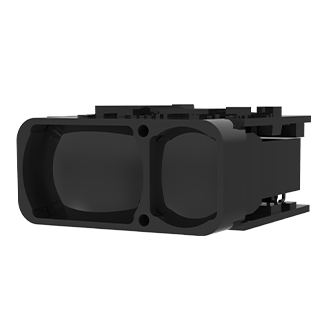
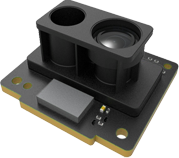
Benewake's TFS20-L is a miniaturized single-point LiDAR module engineered to deliver exceptional performance even in high-intensity sunlight. It integrates these advanced technologies to provide reliable and accurate distance measurements for demanding applications.
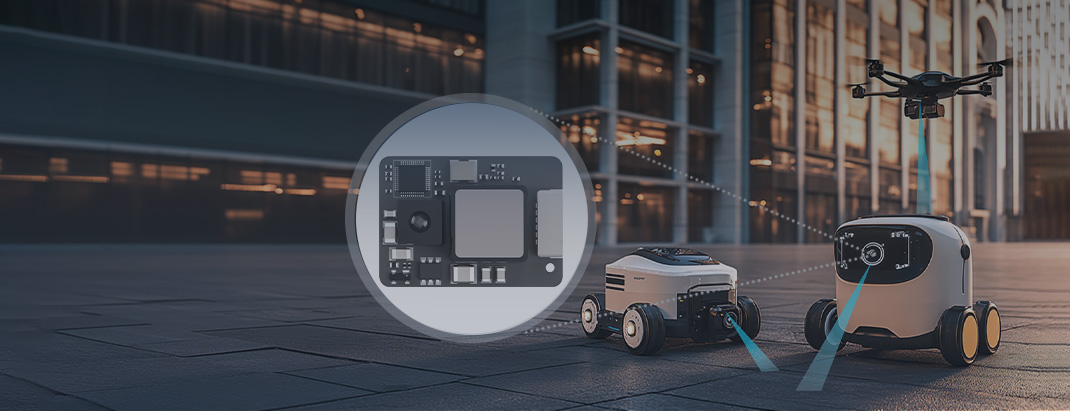
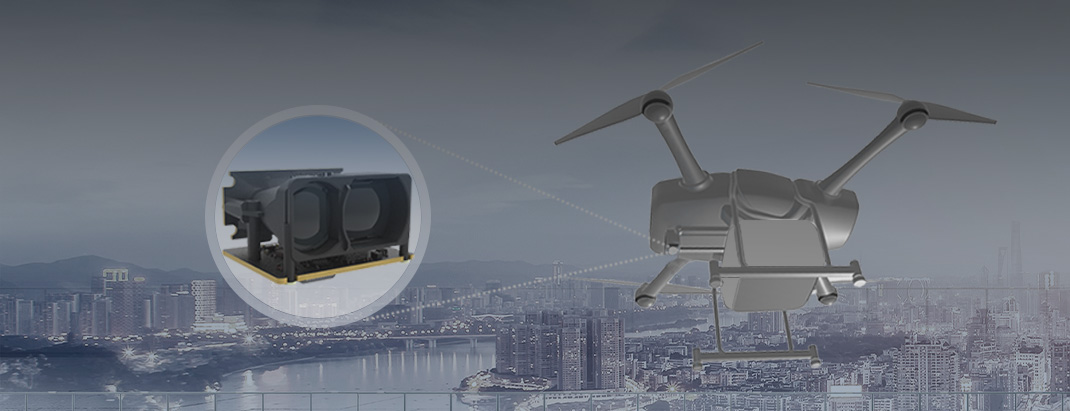
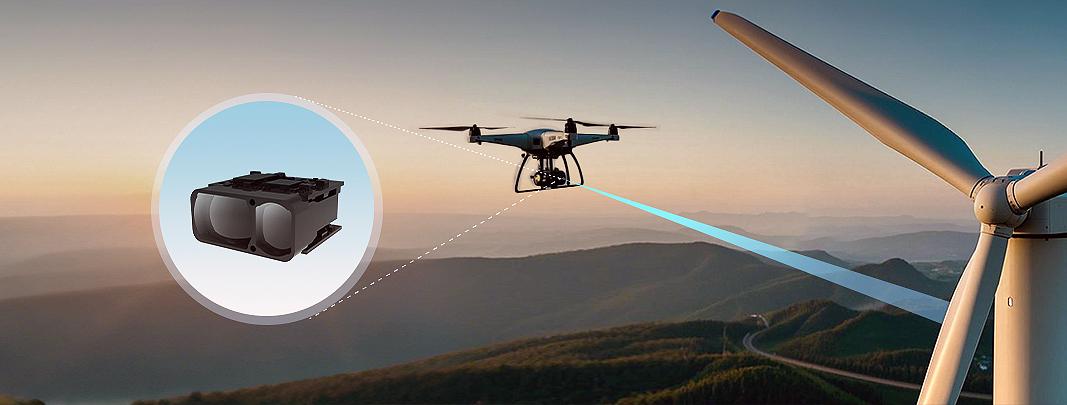
By combining a highly sensitive infrared-enhanced SPAD sensor, a histogram statistical algorithm, and a fast TDC architecture, the TFS20-L mini LiDAR achieves robust sunlight resistance. It is an excellent choice for system integrators developing compact dToF applications for consumer drones, service robots, and IoT devices that must operate reliably both indoors and outdoors.
Key Specifications:
· Anti-ambient Light: 100 klux
· Range: Up to 20 m (15 m @ 100 klux)
· Accuracy: ±6 cm
· Dimensions: 21 mm × 15 mm × 7.87 mm
· Weight: 1.35 g
· Interfaces: I²C, UART
Benewake is a technology company with a global business presence in over 90 countries and regions, holding hundreds of patents in the field. Our innovative LiDAR solutions are trusted by top-tier enterprises to enable automation and intelligent systems across diverse industries.
Contact our team today to learn how the TFS20-L can provide the reliable, sunlight-resistant performance your next project requires.