






















Headquarters:3rd Floor, Haiguo Jiaye Sci-Tech Park, Haidian District, Beijing, China

We use cookies to enhance your browsing experience and serve personalized content.
Reject ALL
Accept ALL


2025-12-02
The Goal of Optical Miniaturization
Optical miniaturization is the systematic reduction of the size and weight of all components within a LiDAR sensor's optical path. This includes the laser emitter, lenses, filters, and the photodetector. The primary objective is to create a fully functional direct Time-of-Flight (dToF) module that is small enough to be integrated into applications where space and weight are critical constraints. This goes beyond simply using smaller parts; it requires a fundamental re-engineering of the entire optical system to maintain performance metrics like range, accuracy, and ambient light resistance in a much smaller form factor.
The Engineering Challenges of Going Small
Shrinking a LiDAR module is not a simple task. It presents several interconnected challenges that must be solved to create a viable, high-performance miniature sensor.
1. Maintaining Signal Strength with a Smaller Aperture
A sensor's ability to collect light is directly related to the size of its receiving lens, or aperture. As the aperture size is reduced during miniaturization, it collects fewer photons from the reflected laser pulse. This inherently weakens the return signal, making it more difficult to distinguish from background noise. To compensate, engineers must use extremely sensitive photodetectors, such as Single-Photon Avalanche Diodes (SPADs), which can reliably detect a very weak signal.
2. Precise Optical Alignment in a Compact Space
A LiDAR system's accuracy depends on the precise alignment of its optical components. The laser beam must be perfectly co-aligned with the detector's field of view. In a miniaturized module where tolerances are measured in micrometers, achieving and maintaining this alignment during manufacturing is a significant challenge. Any slight misalignment can lead to a loss of signal and a drastic reduction in detection range and accuracy. This requires advanced manufacturing techniques and robust optical packaging.
3. Thermal Management
All electronic components generate heat, and LiDAR modules are no exception. In a larger sensor, there is more surface area to dissipate this heat. As the components are packed into a smaller volume, managing thermal output becomes more difficult. Excessive heat can affect the performance and lifespan of both the laser emitter and the detector. Therefore, miniaturized designs must incorporate effective, built-in thermal management or temperature compensation features to ensure stable operation across a range of environmental conditions.
Introducing the TFS20-L: A Triumph of Optical Miniaturization
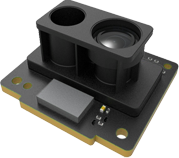
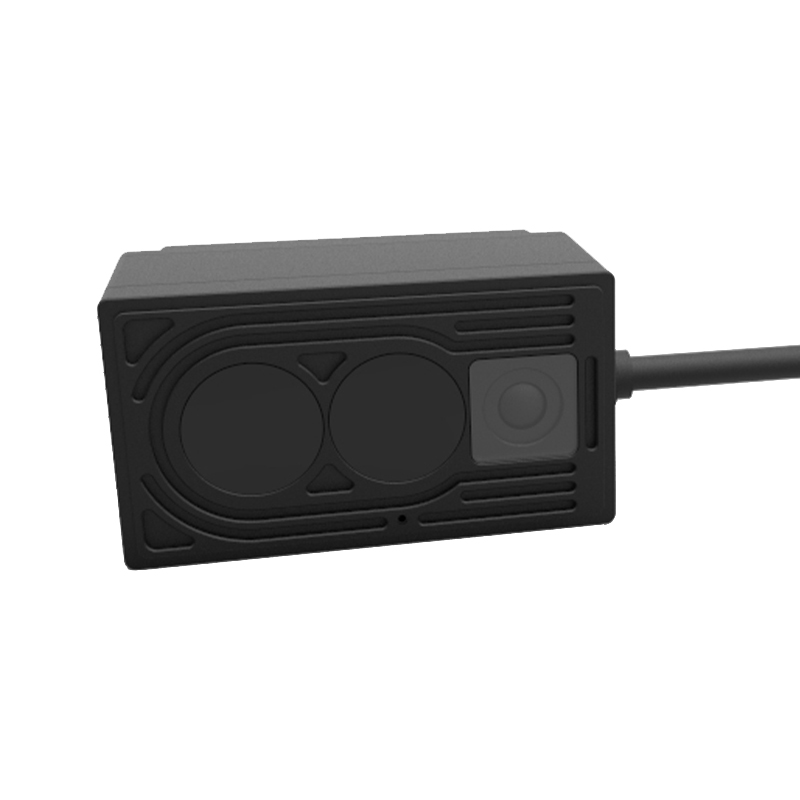
Benewake's TFS20-L miniature LiDAR module is a direct result of successfully overcoming these engineering challenges. It is a fully integrated dToF module that delivers high performance in an exceptionally compact and lightweight package, making it an ideal choice for system integrators developing the next generation of miniature autonomous applications.
The TFS20-L incorporates a highly sensitive infrared-enhanced SPAD sensor and a compact, reliable optical package to deliver precise distance measurements for applications like consumer drones, service robots, and the Internet of Things.
Key Specifications:
· Dimensions: 21 mm × 15 mm × 7.87 mm
· Weight: 1.35 g
· Range: Up to 20 m
· Accuracy: ±6 cm
· Anti-ambient Light: 100 klux
· Interfaces: I²C, UART
Benewake is a LiDAR technology company with hundreds of patents and a global business presence in over 90 countries and regions. Our innovative and cost-effective LiDAR solutions are trusted by top 500 enterprises to achieve automation and intelligent systems.
Contact our team to discover how the advanced, miniaturized design of the TFS20-L can enable your next compact application.