














Headquarters:3rd Floor, Haiguo Jiaye Sci-Tech Park, Haidian District, Beijing, China

We use cookies to enhance your browsing experience and serve personalized content.
Reject ALL
Accept ALL


2025-12-02
System integrators using 3D LiDAR face challenges with the large amount of raw point cloud data, which can strain system resources. Point cloud clipping is a key technique to optimize performance by filtering out unnecessary data and focusing on relevant information. This article explains how point cloud clipping works and its role in building efficient autonomous systems.
Defining Point Cloud Clipping
Point cloud clipping is the process of programmatically removing or excluding portions of the 3D point cloud that fall outside a predefined area or volume. Essentially, it acts as a digital filter that allows a system to ignore irrelevant data points and concentrate its processing power on specific areas of interest. This "clipping" can be based on various parameters, such as distance (range), angle, or a defined three-dimensional space (a bounding box).
The primary goal is to reduce the data load on the perception system's processor, enabling faster, more efficient analysis of the most critical environmental information.
How Does Clipping Function?
The implementation of point cloud clipping is a crucial step in the data processing pipeline, occurring after the LiDAR sensor captures the raw data but before high-level perception tasks like object detection or classification take place.
The Technical Process
1. Defining the Volume: The system integrator first defines the parameters of the volume to be retained. This can be a simple radial distance, excluding all points beyond 200 meters, or a more complex cuboid shape that isolates a specific roadway lane or operational area.
2. Point-by-Point Evaluation: The system's software iterates through each point in the raw data frame. For every point, it checks its coordinates (X, Y, Z) against the defined volume.
3. Filtering: If a point's coordinates fall within the specified boundaries, it is retained for further processing. If it falls outside, it is discarded or "clipped" from the data stream for that frame.
This filtering significantly reduces the number of points the perception algorithms must analyze, leading to lower latency and more efficient resource allocation. For example, an autonomous vehicle may clip out all data points above a certain height (like high-rise buildings) to focus exclusively on the road level where other vehicles and pedestrians are located.
Why is Point Cloud Clipping Important?
The benefits of clipping extend beyond just processing efficiency. It directly contributes to the performance and reliability of an autonomous system.
· Reduced Latency: By processing less data, the system can identify and react to critical objects more quickly.
· Enhanced Focus: Clipping allows a system to concentrate on a Region of Interest (ROI), which can improve the accuracy of object detection and tracking within that specific area.
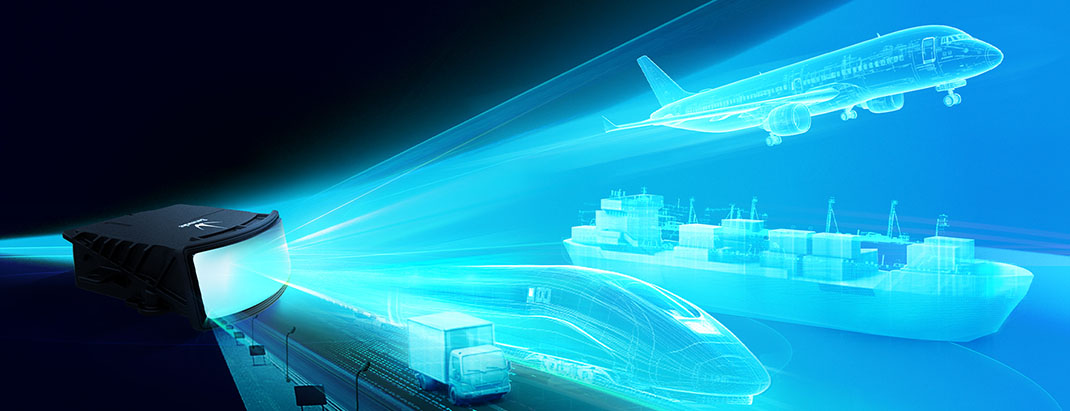
· System Optimization: It allows developers to tailor the perception system to the specific application, whether it's highway driving, port automation, or railway monitoring, ensuring optimal performance without needing to process an entire 360-degree environment.
Introducing the Benewake AD2-S-X3: Advanced Perception Control
The Benewake AD2-S-X3 is a high-performance 3D LiDAR engineered for demanding applications that require both comprehensive awareness and focused perception. Its software-based definable specifications, including a flexible Region of Interest (ROI) setting, allow system integrators to implement sophisticated data management techniques like point cloud clipping with exceptional precision. The AD2-S-X3 3D LiDAR enables the distribution of a denser point cloud to specific areas, enhancing the detection and recognition of small objects within the most critical zones.
Key Specifications:
· Detection Range: 200m @10% reflectivity
· Field of View (FOV): 120° (H) x ~51.2° (V)
· Angular Resolution: Up to 0.1° × 0.1° in ROI
· Frame Rate: 10 Hz
· Equivalent Lines: Up to 256 lines
· Reliability: Automotive-grade, IP67/IP69K rated
Built to meet rigorous automotive standards, including functional safety (ASIL-B) and ISO 21434 for cybersecurity, the AD2-S-X3 provides the high-resolution, reliable data needed for advanced autonomous systems.
Benewake is a LiDAR technology company with a global business presence in over 90 countries, holding hundreds of patents. We deliver innovative LiDAR solutions that empower top 500 enterprises to build more intelligent and secure automated systems. Contact us to learn how the AD2-S-X3 can elevate your perception system's performance.