














Headquarters:3rd Floor, Haiguo Jiaye Sci-Tech Park, Haidian District, Beijing, China

We use cookies to enhance your browsing experience and serve personalized content.
Reject ALL
Accept ALL


2025-12-02
Defining a Detection Zone
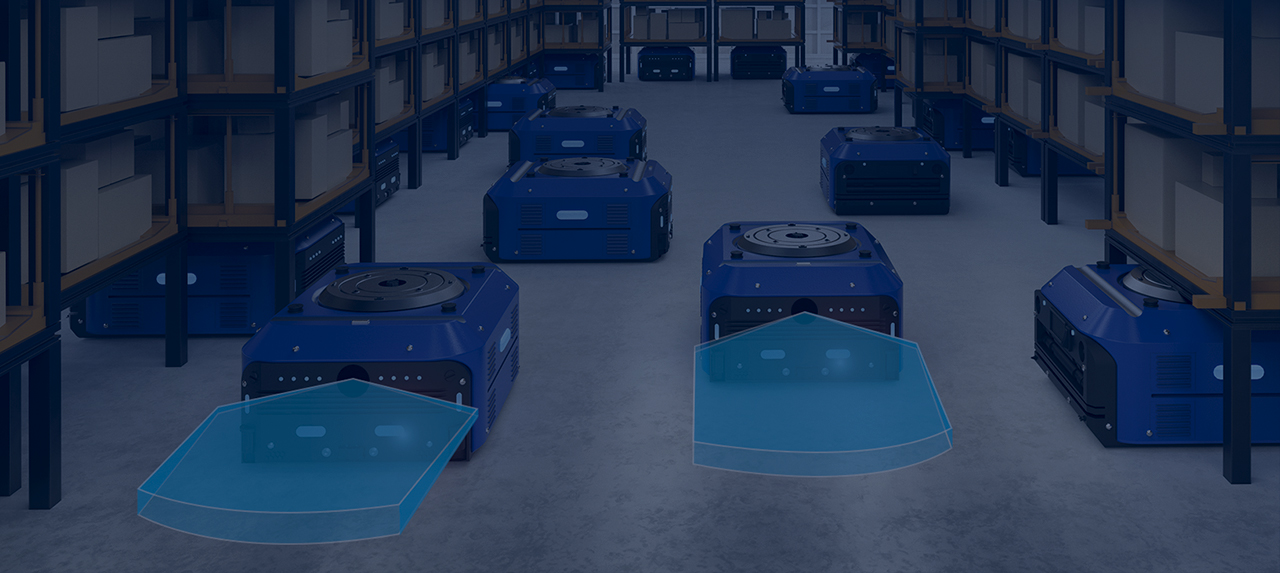
A detection zone, often referred to as a Region of Interest (ROI), is a specific, software-defined three-dimensional space within the LiDAR's overall sensing range. Instead of treating the entire point cloud uniformly, system integrators can instruct the perception system to apply different rules, processing priorities, or analytical models to the data points that fall within this designated zone. This allows for a more intelligent and focused approach to data analysis.
For example, a detection zone could be configured to cover a specific lane on a highway, the operational area around a piece of heavy machinery, or the docking bay for an autonomous truck.
How Are Detection Zones Utilized?
The configuration of a detection zone is a flexible process performed through software, allowing for dynamic adjustments without any need for hardware modification. The primary applications of this functionality are centered on optimizing system resources and enhancing perceptual capabilities.
Prioritizing Computational Resources
Processing a full 3D point cloud, which can contain millions of points per second, is computationally intensive. By establishing detection zones, a system can concentrate its processing power on the most critical areas. For instance, data inside a high-priority detection zone might be analyzed for object classification and tracking, while data outside the zone could be used only for basic obstacle avoidance or even disregarded entirely. This reduces system latency and allows for faster reaction times.
Enabling High-Resolution Scanning in Critical Areas
Advanced LiDAR systems allow for the dynamic allocation of scan lines or point density. A detection zone can be configured as a high-resolution ROI. Within this zone, the LiDAR can increase its angular resolution, creating a much denser point cloud. This is particularly valuable for identifying and classifying small or distant objects. A common application is focusing high resolution on the road ahead to detect pedestrians or small obstacles at long range, while using a lower resolution for peripheral areas.
The Benefits for System Integrators
The use of detection zones provides several key advantages for developers of autonomous systems:
· Increased Efficiency: Reduces the computational load, enabling the use of more cost-effective processing hardware.
· Enhanced Performance: Improves the detection and recognition accuracy of small or distant objects within the ROI.
· Greater Flexibility: Allows a single LiDAR sensor to be adapted for various applications and operational environments through software settings.
Introducing the Benewake AD2-S-X3: Flexible, High-Resolution Perception
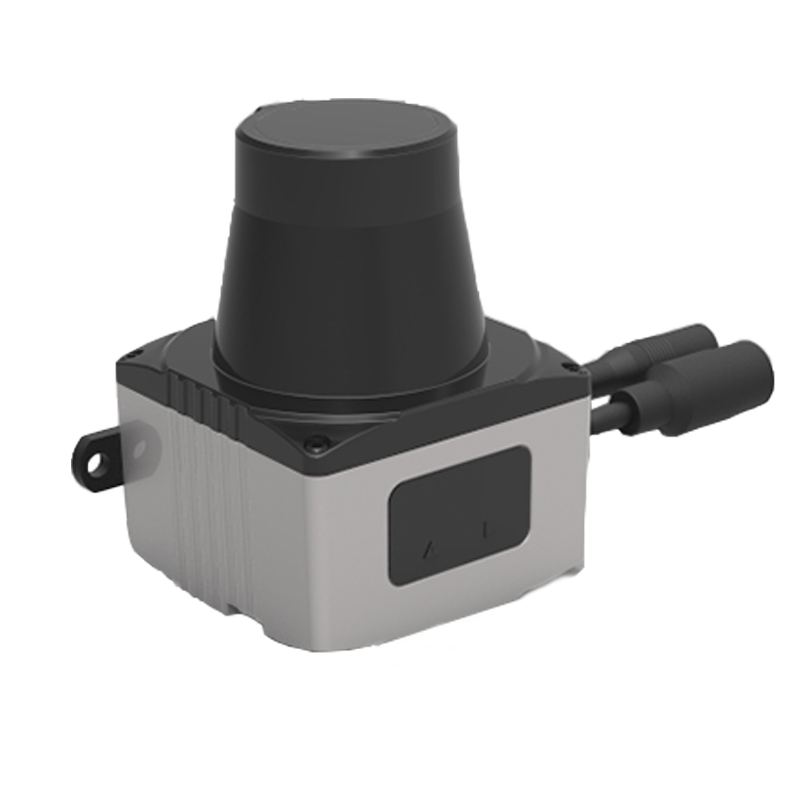
The Benewake AD2-S-X3 is a high-performance 3D LiDAR engineered with the flexibility required for advanced autonomous applications. A key feature of the AD2-S-X3 is its software-based definable specification, which includes a built-in, easily configurable Region of Interest (ROI) function. This allows system integrators to define precise detection zones and distribute a denser point cloud to those specific areas, significantly enhancing the ability to detect and recognize small objects at distance.
Key Specifications:
· Detection Range: 200m @10% reflectivity
· Field of View (FOV): 120° (H) x ~51.2° (V)
· Angular Resolution: Up to 0.1° × 0.1° in a defined ROI
· Frame Rate: 10 Hz
· Equivalent Lines: Up to 256 lines
· Reliability: Automotive-grade with IP67/IP69K ingress protection
With its robust, automotive-grade design and compliance with standards for functional safety (ASIL-B) and cybersecurity (ISO 21434), the AD2-S-X3 LiDAR 3D scanner provides the reliable, high-resolution data necessary for mission-critical systems in rail transit, V2X, and autonomous mobility.
Benewake is a global LiDAR technology company with hundreds of patents, providing innovative LiDAR solutions to clients in over 90 countries. Our products empower top-tier enterprises to build more intelligent and secure automated systems. Contact us to learn how the flexible ROI capabilities of the AD2-S-X3 can optimize your perception system.