














Headquarters:3rd Floor, Haiguo Jiaye Sci-Tech Park, Haidian District, Beijing, China

We use cookies to enhance your browsing experience and serve personalized content.
Reject ALL
Accept ALL


2025-12-02
For system integrators developing volume perception systems, understanding the scanning methodology of a LiDAR system is crucial. The two prevalent methods, multi-line scanning and arc scanning, directly impact the point cloud's density and structure. Although both create three-dimensional maps, their operational principles and ideal use cases vary significantly. This article will offer a technical comparison to assist integrators in selecting the appropriate technology.
Multi-Line Scanning: High-Speed, Fixed-Pattern Acquisition
Multi-line scanning is a method commonly associated with 3D LiDAR sensors that use a fixed array of vertically stacked laser beams. As the sensor head rotates or sweeps, these multiple lines scan the environment simultaneously, creating a structured, parallel pattern of data points.
How Multi-Line Scanning Works
Imagine a rake with several tines; as you pull it across a surface, it creates multiple parallel lines at once. A multi-line LiDAR functions similarly. A single laser source is often split into a vertical array (e.g., 64, 128, or 256 lines). This entire array is then scanned horizontally. This architecture allows the sensor to capture a large amount of data very quickly with each pass, making it well-suited for dynamic applications where high frame rates are essential for tracking moving objects. The resulting point cloud has a consistent, grid-like pattern.
Arc Scanning: Flexible, High-Density Sweeping
Arc scanning, also known as step grid scanning, is a mechanical method used to generate a 3D point cloud, often using a single-point or 2D LiDAR. This technique involves mounting the sensor on one or more servo motors that systematically move it through a predefined path.
How Arc Scanning Works
This method uses two rotating servos to create a sweeping motion. One servo controls the primary horizontal sweep (the "arc"), while a second servo incrementally adjusts the vertical angle after each horizontal pass. This creates a "step grid" pattern. For example, the system might perform a 120° horizontal arc scan, step down by one degree vertically, and then perform another 120° arc scan. By repeating this process, it methodically builds a high-density 3D point cloud of the target area. The key advantage of this approach is its flexibility; system integrators can adjust the scanning angle, speed, and step interval to control the point cloud density and total scan time.
Key Differences between Multi-Line and Arc Scanning
Feature | Multi-Line Scanning | Arc Scanning (Step Grid) |
Mechanism | Fixed vertical array of laser lines with horizontal sweep. | Single sensor moved by one or two servos in a sweeping pattern. |
Speed | Very high frame rates, suitable for real-time dynamic scenes. | Slower scan time, determined by servo speed and desired density. |
Flexibility | Less flexible; scan pattern and density are fixed by hardware. | Highly flexible; angle, speed, and resolution are software-configurable. |
Application | Autonomous driving, real-time mobile robotics. | Static volume measurement (stockpiles, silos), 3D reconstruction. |
Point Cloud | Structured, parallel lines of points. | Dense, grid-like pattern, often with higher resolution. |
Which Method Is Better for Volume Measurement?
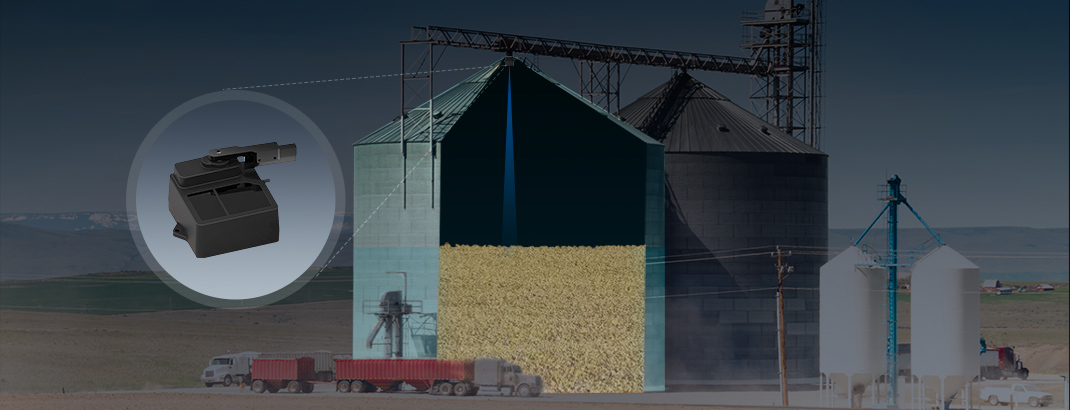
For static volume measurement applications like monitoring material levels in silos or calculating the volume of coal stockpiles, arc scanning offers significant advantages. Its ability to be configured for a specific area allows it to generate an extremely high-density point cloud focused solely on the target material. This dense data creates a more accurate 3D model, leading to higher precision in volume calculations. The slower scan time is generally not a limitation in these static environments.
Benewake is a global LiDAR technology leader with a business presence in over 90 countries, holding hundreds of patents in the LiDAR field. We provide innovative, high-performance LiDAR solutions that empower enterprises worldwide to build more intelligent, efficient, and secure automated systems across industries like rail transit, civil aviation, shipping, and industrial automation.
Our LiDAR volume measurement systems utilize advanced scanning techniques to deliver high-precision measurements for applications ranging from material level monitoring to 3D reconstruction.
Contact our team to discover how Benewake's advanced LiDAR solutions can be tailored to meet the specific demands of your volume detection project.