















Headquarters:3rd Floor, Haiguo Jiaye Sci-Tech Park, Haidian District, Beijing, China

We use cookies to enhance your browsing experience and serve personalized content.
Reject ALL
Accept ALL


2025-12-02
The Challenge of Reflectivity and Color
A primary factor influencing LiDAR performance is the target material's reflectivity. This property dictates how much of the emitted laser light returns to the sensor's detector. Different materials interact with light in vastly different ways.
· Low Reflectivity (e.g., Coal): Coal is a dark, porous material that absorbs a significant portion of the near-infrared light used by LiDAR sensors. This results in a very weak return signal. To measure coal stockpiles accurately, a LiDAR system must feature a highly sensitive photodetector, such as a Single-Photon Avalanche Diode (SPAD), capable of identifying this faint signal amidst background noise.
· High Reflectivity (e.g., Sand): In contrast, sand and other light-colored minerals are highly reflective. While this produces a strong return signal, it can also create issues with signal saturation or blooming, where an excessively strong signal overwhelms the detector. Advanced LiDAR systems use sophisticated algorithms and automatic gain control to adjust the sensor's sensitivity dynamically, preventing data inaccuracies caused by overly bright targets.
Navigating Surface Texture and Angle of Repose
The surface topography of a stockpile is another critical variable. The natural slope at which a material settles, known as the angle of repose, and its surface texture both affect the 3D model generated by the LiDAR.
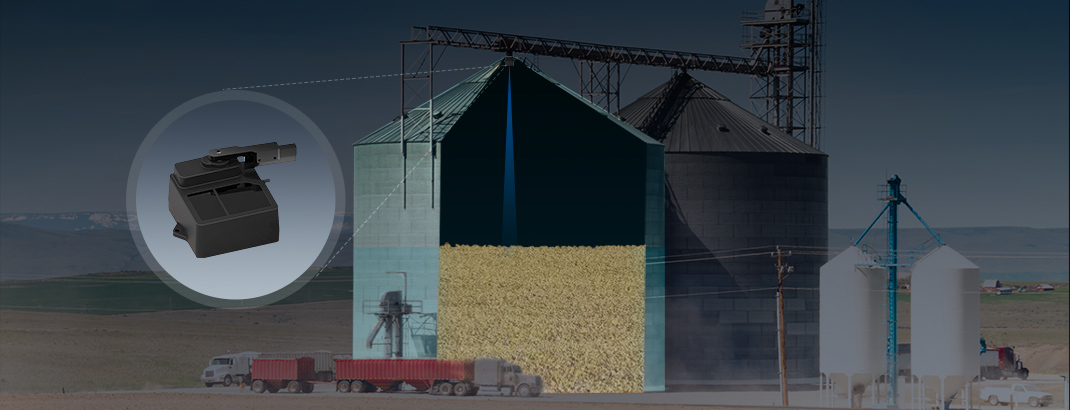
· Fine Materials (e.g., Grain, Fine Sand): These materials tend to form smoother, more uniform surfaces. However, their small particle size can create significant airborne dust during loading and unloading. This dust can cause atmospheric attenuation, scattering the laser beam and preventing accurate readings. LiDAR systems designed for these environments often incorporate algorithms to filter out dust-related noise and may be paired with self-cleaning mechanisms to keep the optics clear.
· Coarse Materials (e.g., Gravel, Large Coal Chunks): These materials create highly irregular surfaces with many peaks and troughs. To accurately model this complex topography, the LiDAR system requires a high angular resolution. A dense point cloud, achieved through methods like step grid arc scanning, is necessary to capture these details and prevent the software from "smoothing over" the surface, which would lead to significant volume calculation errors.
System-Level Adaptations for Universal Accuracy
Modern LiDAR volume measurement systems achieve versatility through a combination of robust hardware and configurable software. By allowing system integrators to adjust parameters such as scanning angle, speed, and step interval, a single system can be optimized for various materials. This adaptability ensures that whether the target is a dark pile of coal or a bright silo of grain, the system can generate a dense, accurate point cloud for precise volume calculation.
Benewake is a global LiDAR technology leader with a business presence in over 90 countries, holding hundreds of patents in the LiDAR field. We provide innovative, high-performance LiDAR solutions that empower enterprises worldwide to build more intelligent, efficient, and secure automated systems across industries like rail transit, civil aviation, shipping, and industrial automation. Our volume detection systems are engineered with the adaptability to deliver precise measurements across a wide range of materials and industrial conditions.
Contact our team to discover how Benewake's advanced LiDAR solutions can be configured to provide the high-precision volume measurements your operation requires.