






















Headquarters:3rd Floor, Haiguo Jiaye Sci-Tech Park, Haidian District, Beijing, China

We use cookies to enhance your browsing experience and serve personalized content.
Reject ALL
Accept ALL


2025-12-02
GPS: The Global Standard for Outdoor Positioning
The Global Positioning System (GPS) is a satellite-based radionavigation system that provides geolocation and time information to a receiver anywhere on or near the Earth. It is the default technology for outdoor, open-sky navigation.
· How It Works: A GPS receiver calculates its position by precisely timing signals sent from a constellation of satellites. By locking onto signals from at least four satellites, it can determine its latitude, longitude, altitude, and time.
· Strengths: GPS offers global coverage and is highly effective for long-range, point-to-point navigation in unobstructed outdoor environments.
· Weaknesses: Its primary limitation is its reliance on clear satellite signals. Performance degrades significantly or fails completely in "GPS-denied" environments such as urban canyons, dense forests, indoors, or underground. Furthermore, its accuracy, typically within a few meters, is often insufficient for precision tasks like close-quarters inspection or stable hovering.
Vision Systems: Interpreting the World Through Cameras
Vision-based navigation utilizes cameras and complex algorithms to interpret the surrounding environment. Techniques like Visual Odometry (VO) or Simultaneous Localization and Mapping (SLAM) allow a UAV to determine its position and orientation by tracking features in the visual feed.
· How It Works: The system identifies and tracks thousands of feature points (like corners or textures) from one video frame to the next. By analyzing the apparent motion of these points, it can deduce the camera's movement through space.
· Strengths: Vision systems are lightweight, low-cost, and provide rich data about the environment, enabling object recognition in addition to navigation. They can operate effectively in GPS-denied environments.
· Weaknesses: Performance is highly dependent on ambient lighting conditions. In low-light, fog, or visually homogenous environments (e.g., a plain white wall), the system may fail to identify enough features to navigate reliably. It can also be computationally intensive.
LiDAR: Precision Ranging with Light
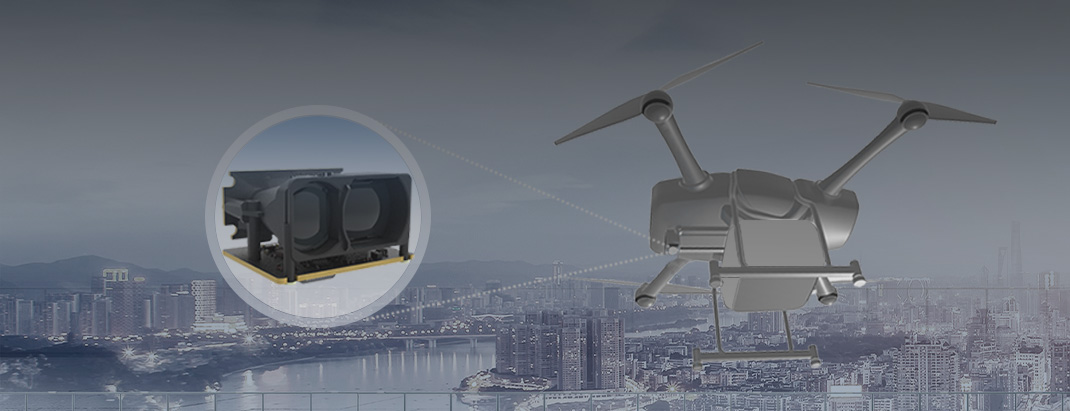
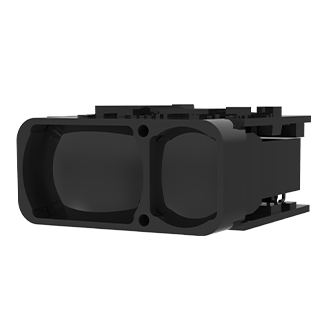
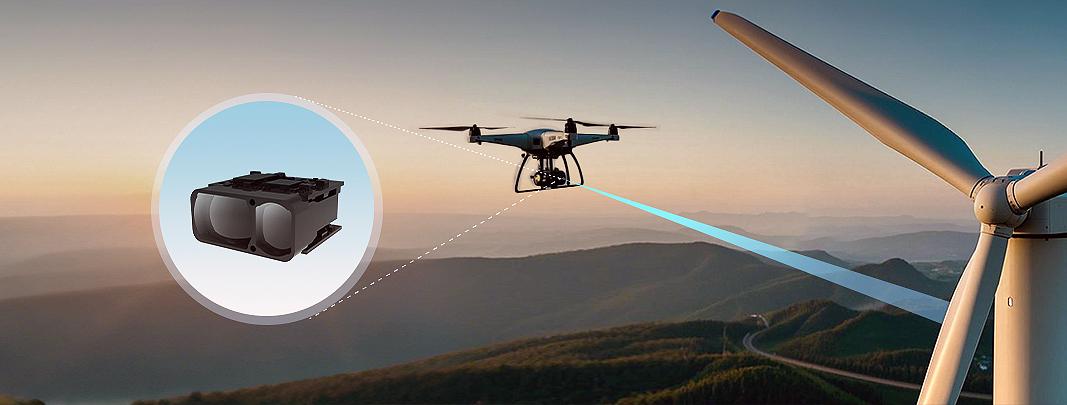
LiDAR (Light Detection and Ranging) provides highly accurate distance measurements by emitting laser pulses and measuring their return time. For navigation, it excels at providing precise, absolute data about the drone's immediate surroundings.
· How It Works: A LiDAR sensor emits a narrow beam of light and measures the exact distance to an object or surface. This capability is foundational for critical flight functions that require high precision.
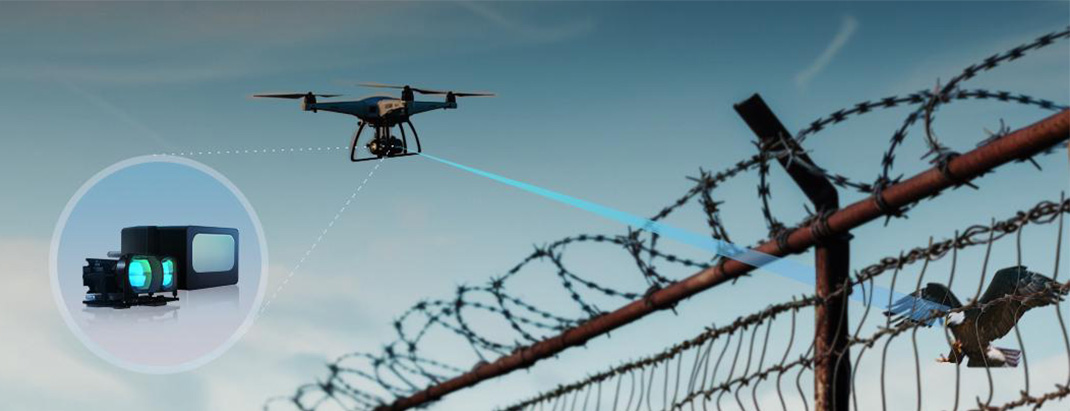
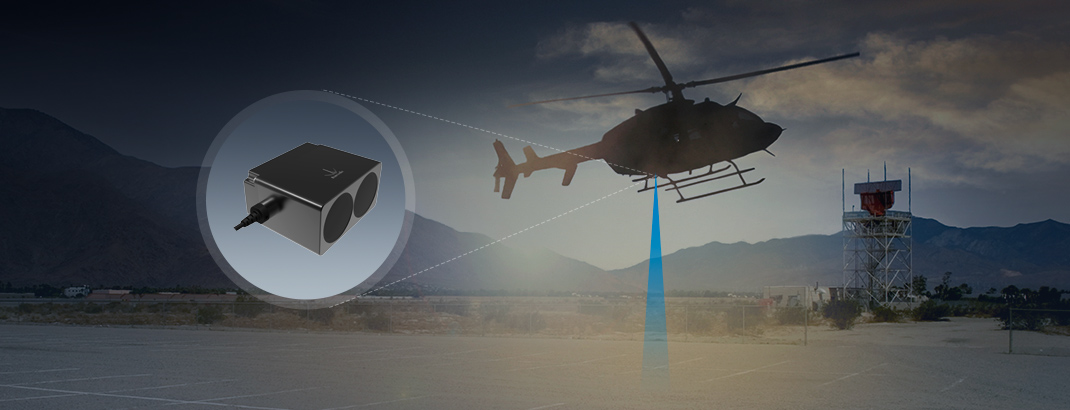
· Strengths: LiDAR offers centimeter-level accuracy, operates independently of ambient light, and provides a direct, unambiguous distance measurement. This makes it exceptionally reliable for terrain following, position holding, and collision avoidance, especially in GPS-denied or low-visibility conditions. Its high update rate enables rapid responses to environmental changes.
· Weaknesses: While excellent for ranging and mapping, standard LiDAR does not provide the rich contextual data (color, texture) that a camera does for object classification.
The Verdict: Fusion Is Supreme
No single technology reigns supreme. The most robust navigation systems utilize sensor fusion, a process where the flight controller intelligently combines the strengths of each technology to overcome their individual weaknesses. GPS provides the macro-level global position, vision systems offer contextual awareness, and LiDAR delivers the micro-level, high-precision data essential for safety-critical functions like stable hovering and terrain following. In this triad, LiDAR provides the highly reliable, absolute distance data that anchors the system's perception of its immediate environment.
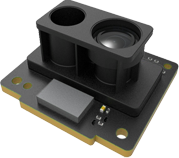
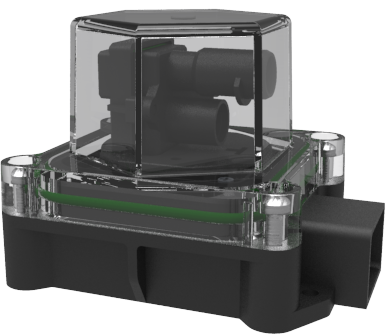
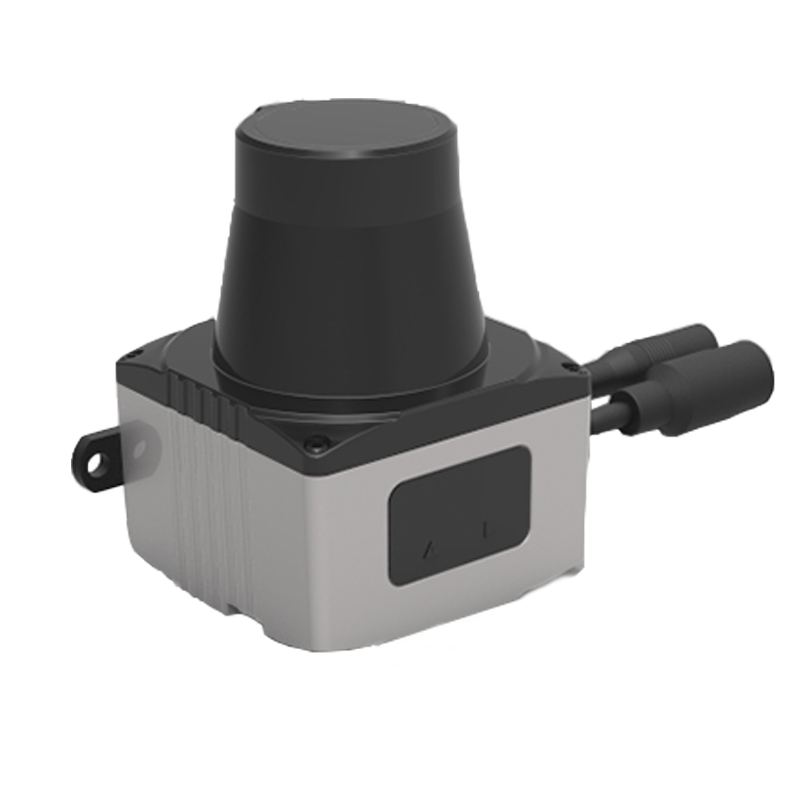
Benewake is a global LiDAR technology company with hundreds of patents and a business presence in over 90 countries. Our innovative LiDAR sensor for UAV solutions are engineered to meet the demanding requirements of the UAV industry, providing the high-performance data needed for everything from stable flight to intelligent automation. Our miniaturized LiDAR sensors, capable of passing DO-160G certification, empower system integrators to build safer, more capable, and longer-flying UAVs.
Contact our team to discover how Benewake’s advanced LiDAR solutions can provide the precision and reliability your navigation system demands.