














Headquarters:3rd Floor, Haiguo Jiaye Sci-Tech Park, Haidian District, Beijing, China

We use cookies to enhance your browsing experience and serve personalized content.
Reject ALL
Accept ALL


2026-01-07
In our ongoing research and engineering work at Benewake, we continuously refine how lidar scanner for volume measurement systems perform in complex industrial environments. One of the most critical factors influencing data precision is point cloud density—a parameter that directly determines how accurately a LiDAR device can interpret the geometry and size of an object or material pile. Whether the goal is to monitor stockpiles in logistics centers, assess construction material volume, or perform terrain surface modeling, understanding the link between density and volume accuracy is essential for achieving consistent and reliable results.
Understanding Point Cloud Density in LiDAR Measurements
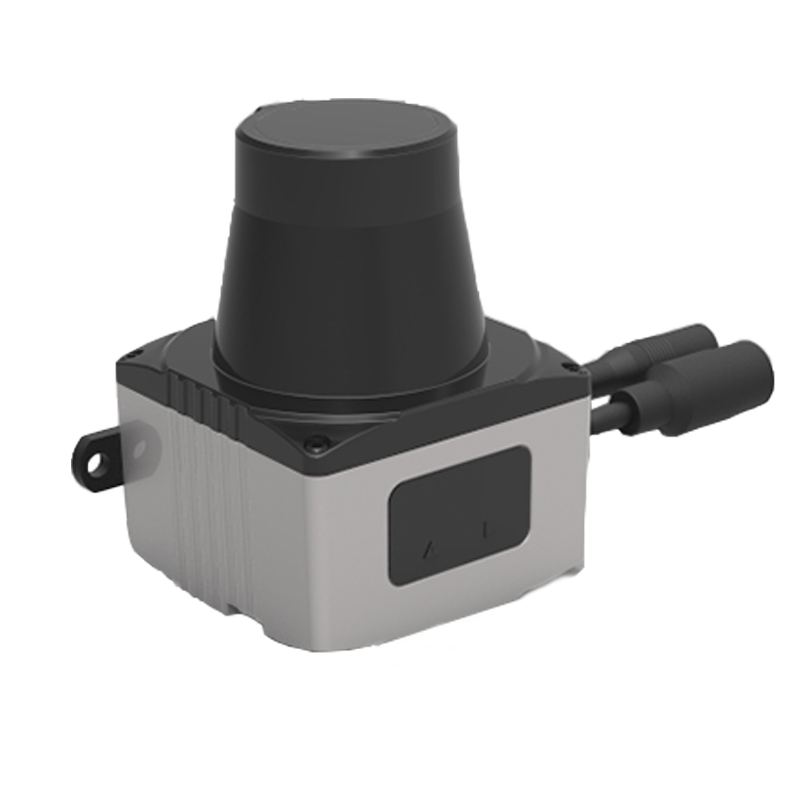
A lidar scanner for volume measurement works by emitting laser pulses that reflect off surfaces and return to the receiver, creating a digital “point cloud.” The density of this cloud—how many laser points are captured per unit area—affects how well the scanned shape is represented. At Benewake, we have observed that higher point cloud densities enable finer detail, smoother surface reconstruction, and more precise edge detection. However, density optimization is not simply about using more points; it’s about ensuring that the system collects enough data for the surface type, distance, and reflectivity without overwhelming processing capacity or generating noise.
Our LiDAR systems are engineered to balance range, resolution, and scanning speed, providing stable accuracy even under changing light or environmental conditions. By using advanced algorithms, we can filter redundant points and maintain only the essential ones needed for reliable lidar scanner for volume measurement results.
Why Density Optimization Improves Volume Accuracy
When measuring bulk materials—such as ore, gravel, or soil—minute variations in point distribution can significantly influence the calculated volume. Low-density clouds may overlook subtle depressions or irregular shapes, while overly dense data may cause noise accumulation that skews measurements. Our approach at Benewake focuses on adaptive scanning modes, where the system automatically adjusts its sampling density according to the surface geometry.
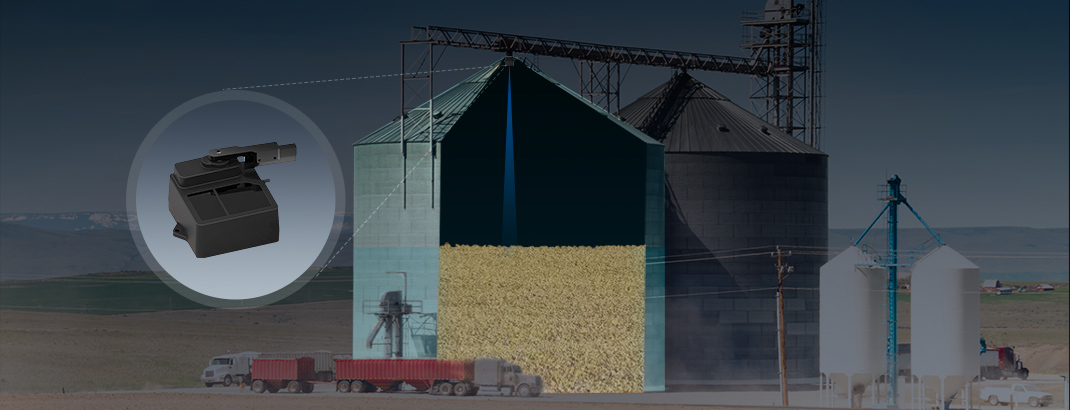
This feature ensures that in flatter regions, fewer points are sufficient, while in areas with sharp changes or complex textures, more data is gathered. The outcome is a cleaner point cloud that accurately represents the real surface without excess data processing. In practical applications like warehouse storage monitoring or open-pit mining pile assessment, such adaptive control greatly enhances the reliability of lidar scanners for volume measurement systems.
Conclusion
At Benewake, we believe that accuracy in lidar scanners for volume measurement depends not only on sensor capability but also on intelligent management of point cloud density. Through years of field testing and product innovation, we have built a portfolio of LiDAR solutions that provide dependable results in fixed installations for industrial and infrastructure applications. We continue to explore new ways to make LiDAR technology more adaptable and efficient, helping our global partners achieve safer, smarter, and more data-driven operations.