














Headquarters:3rd Floor, Haiguo Jiaye Sci-Tech Park, Haidian District, Beijing, China

We use cookies to enhance your browsing experience and serve personalized content.
Reject ALL
Accept ALL


2026-01-07
As a company dedicated to advancing LiDAR technology, we at Benewake have seen how precise sensing and distance detection transform industries that deal with large, complex materials. One of the most demanding applications is stockpile measurement, where irregular surfaces and varied material shapes make accuracy a constant challenge. Through our research and engineering, we have developed fixed LiDAR systems capable of handling these environments efficiently and consistently.
Understanding the Challenge of Irregular Stockpiles
In sectors like mining, construction, and logistics, stockpiles of sand, coal, or gravel rarely form smooth surfaces. These uneven materials often create unpredictable reflections, shadows, and measurement gaps when using traditional ultrasonic or camera-based systems. As engineers, we know that reliable stockpile measurement must consider both the height variation and the three-dimensional shape of materials. That’s where LiDAR becomes a key enabler. By emitting rapid laser pulses and capturing return signals, LiDAR can map even the most irregular terrain with centimeter-level precision—without requiring physical contact or constant calibration.
How LiDAR Overcomes Complex Material Shapes
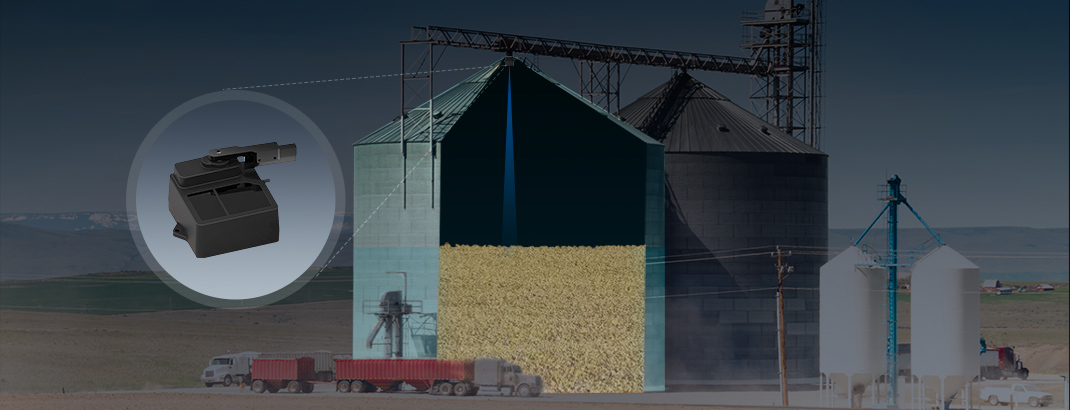
At Benewake, we design our fixed LiDAR solutions to deal with both reflective and absorbent material types. The sensor works by collecting dense point cloud data that represent the real shape of a stockpile or material surface. This data is processed to build accurate 3D models that reveal volume, density, and contour differences. Compared to manual measurement or drone scanning, fixed LiDAR offers stable, repeatable readings over time, making it ideal for long-term monitoring of warehouses, loading zones, or open storage yards.
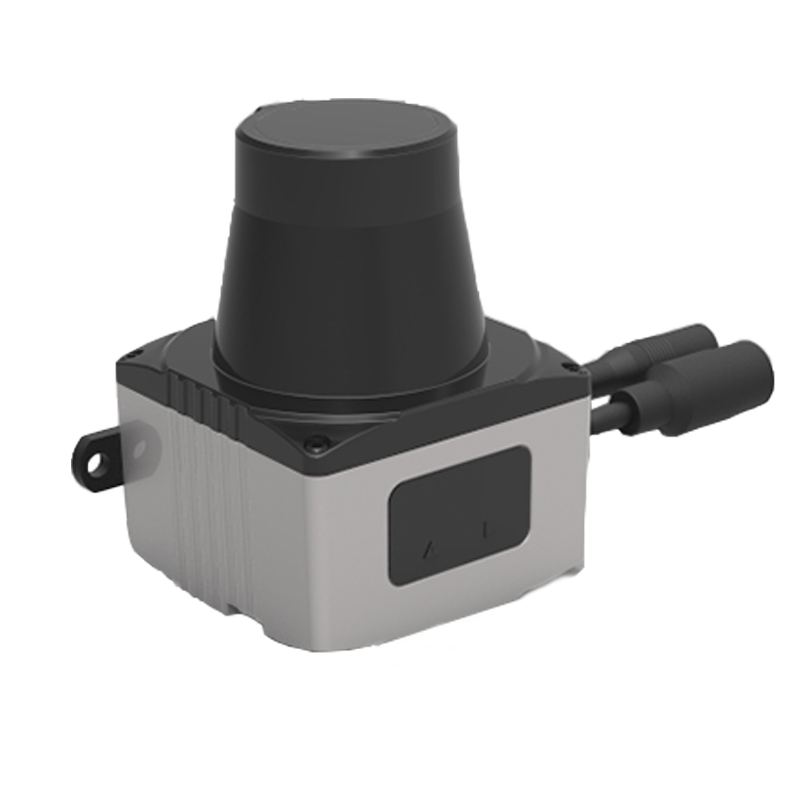
Our systems, such as those used in the Volume Detection application, are installed in fixed positions—avoiding the environmental limitations that affect mobile devices. This design ensures reliability under dust, humidity, and temperature fluctuations. Because the LiDAR operates autonomously and requires minimal maintenance, it can continuously provide accurate stockpile measurement data in real-world industrial conditions.
From Surface Complexity to Reliable Data
We believe that data integrity starts with dependable sensing technology. Each Benewake LiDAR device undergoes strict testing for environmental stability, range accuracy, and material adaptability. By combining precise optics with smart signal processing, our technology can differentiate between fine powders, solid minerals, or mixed aggregates. This ensures that even when material shapes change over time, the measurement results remain stable and consistent.
As industries evolve toward automation and smarter resource management, fixed LiDAR systems like ours are becoming essential tools for monitoring inventory and optimizing space utilization. At Benewake, we continue to refine our LiDAR solutions to meet the challenges of complex, irregular surfaces—helping clients achieve efficient, safe, and data-driven operations in stockpile measurement and beyond.