














Headquarters:3rd Floor, Haiguo Jiaye Sci-Tech Park, Haidian District, Beijing, China

We use cookies to enhance your browsing experience and serve personalized content.
Reject ALL
Accept ALL


2026-06-03
The equipment has finally arrived, but the sensor interfaces don't match the flight controller at all. This is not an isolated incident, but a recurring pain point frequently encountered in industry procurement.
Many companies complete their technical selection and procurement processes for a drone sensor, only to discover during the unboxing and testing phase that the sensor and flight controller cannot communicate. The root cause is often not a quality issue with the LiDAR product itself, but rather inconsistent sensor interfaces, vague compatibility claims, and misunderstandings of communication protocols within the technical team.
This guide helps buyers identify and avoid such risks before ordering.
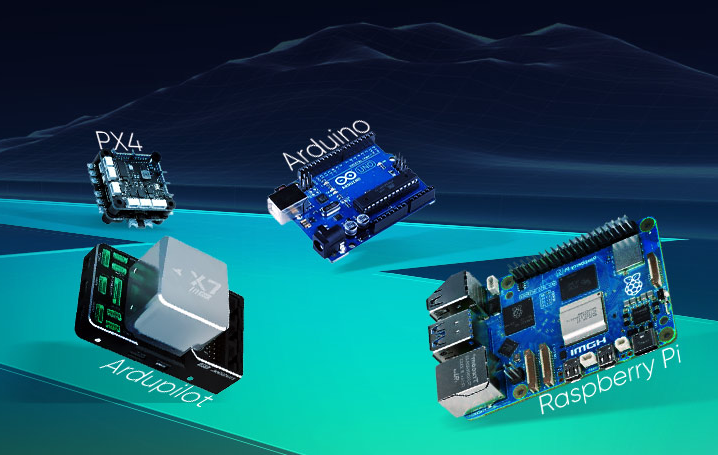
Manufacturers of drone sensors often claim compatibility with mainstream flight controllers, but there are dozens of so-called mainstream options on the market. Specification sheets may look similar, yet the actual sensor interfaces can be completely different. Below is an objective comparison of the four most common interface types.
l Advantage: Universally compatible. Nearly all open-source flight controllers (e.g., Pixhawk, ArduPilot, PX4) and commercial systems reserve at least 2 to 4 UART serial ports.
l Suitability: Small to medium-sized drone projects with limited budgets and high requirements for general-purpose compatibility.
l Limitation: Weak anti-interference capability and short transmission distance (generally recommended under 50 cm). In large agricultural drones with high-power motors and long cable runs, UART is highly susceptible to data packet loss.
l Advantage: A multi-drop bus architecture. It allows multiple sensors (such as compasses, barometers, and obstacle avoidance modules) to be connected to a single set of pins.
l Suitability: Compact drones (FPV, small aerial photography drones) where sensors are mounted in close proximity to the flight controller.
l Limitation: Extremely sensitive to electromagnetic noise. Wiring routed near motor power lines often leads to bus lock-ups, causing the flight controller to lose sensor data.
l Advantage: Industrial-grade stability. It features robust anti-interference capabilities and error-correction mechanisms, supports long-distance wiring, and allows for multi-device networking. It is the preferred choice for medium-to-large industrial drones.
l Suitability: Power line inspection, logistics transportation, and high-reliability industrial missions.
l Limitation: The protocol stack is relatively complex. It requires the configuration of Node IDs and demands a higher level of technical proficiency during debugging.
l Advantage: Supports long-distance transmission. It has been validated in industrial control environments for decades and offers high stability, particularly when paired with specific industrial flight controllers like the CUAV series.
l Suitability: Sensors mounted at the extremities of drones with exceptionally long wheelbases.
l Limitation: Lower transmission rates compared to CAN, making it unsuitable for high-frequency transmission of large-scale point cloud data.
In addition to sensor interfaces, the following four dimensions are often overlooked during procurement decisions, leading to significantly increased maintenance costs later.
Drones are highly sensitive to the weight of each drone sensor. Every additional gram of LiDAR weight affects flight time, center of gravity distribution, vibration characteristics, and maximum takeoff weight margin.
When selecting a lightweight LiDAR, additional considerations apply. Even if the physical interface is the same, the sensor cannot be used if the flight controller firmware (e.g., ArduPilot, PX4, Betaflight) has not integrated the sensor's driver or parsing protocol.
Before selection, confirm whether the LiDAR product appears in the official supported device list of the target flight controller firmware.
Once a LiDAR sensor is applied in mass production, if the supplier discontinues production, changes the model, or modifies the protocol, it may lead to complete drone production stoppage or spare parts shortages.
Inquire about the supplier's product lifecycle commitment, historical supply records, and whether any unplanned change cases have occurred.
Industrial drone projects using sensors for LiDAR often require ongoing debugging. Lack of effective technical support may leave issues unresolved for extended periods.
Clarify whether the supplier provides engineering support in the local language, SDK, sample code, and fault response times.
A drone sensor that natively supports multiple sensor interfaces (e.g., UART, CAN, RS-485 simultaneously) minimizes compatibility risks caused by flight controller model changes or interface misjudgment. Even if the flight controller is replaced or the hardware design is adjusted later, the sensor can switch to another interface seamlessly. Advantages include:
l One SKU compatible with multiple flight controller platforms
l Reduced need for adapter boards and wiring harness design changes
l Easier inventory management and batch procurement
l Multi-interface Support: Benewake LiDAR (e.g., TF series) typically integrates UART and I²C (with optional CAN or RS-485) within a single physical interface, relieving procurement decision pressure.
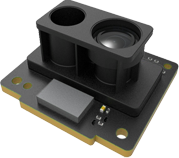
l Lightweight Design: Optimized for drone payloads. Power consumption and weight are kept at low levels while maintaining accuracy, which supports extended flight range. For example, the TFA300-L weighs only 10.5g.
l Industrial Cost-effectiveness: Compared to industrial rangefinders that often cost thousands of dollars, Benewake offers competitive pricing for batch procurement, and its technical documentation covers major domestic and international flight controller platforms.
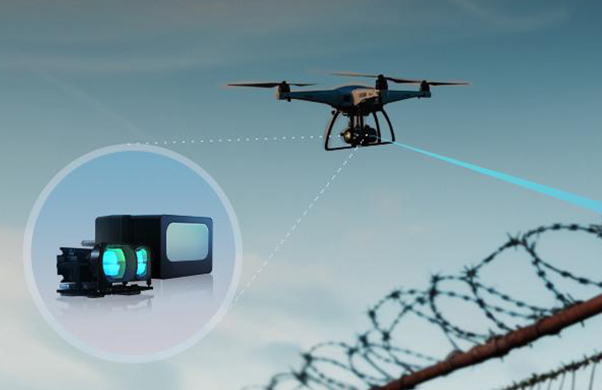
Selecting a compatible sensor for a drone is not solely a matter of matching hardware interfaces. Procurement decisions must consider multiple factors, including interface type, weight, flight controller firmware support, supply stability, and after-sales technical support.
By following the guidelines outlined in this document, procurement teams can identify and eliminate compatibility risks before placing an order, minimizing project delays, cost overruns, and technical friction.