














Headquarters:3rd Floor, Haiguo Jiaye Sci-Tech Park, Haidian District, Beijing, China

We use cookies to enhance your browsing experience and serve personalized content.
Reject ALL
Accept ALL


2026-06-03
As UAVs expand from recreational use into professional and industrial operations, the requirements placed on drone LiDAR sensors diverge significantly between the two segments.
Manufacturers who apply consumer drone standards when developing industrial platforms face predictable consequences: sensor instability, mission failure, and cost overruns.
This article compares the requirements of consumer and industrial drones for LiDAR, helping manufacturers select solutions that match their deployment context.
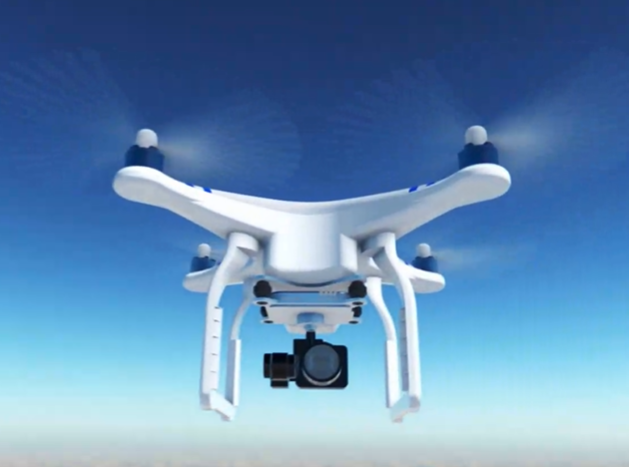
The fundamental divide between consumer and industrial drone LiDAR stems from the nature of the mission. While consumer drones prioritize user experience and supplementary safety, industrial platforms are purpose-built for high-stakes operational reliability.
Consumer drones use LiDAR primarily for:
l Basic obstacle avoidance
l Altitude hold
l Simple environmental awareness
Flights are typically short, infrequent, and conducted in controlled or semi-controlled environments. The operator is present and can intervene at any time.
Precision requirements are moderate, and a degree of measurement variation is acceptable without significantly impacting user experience or safety.
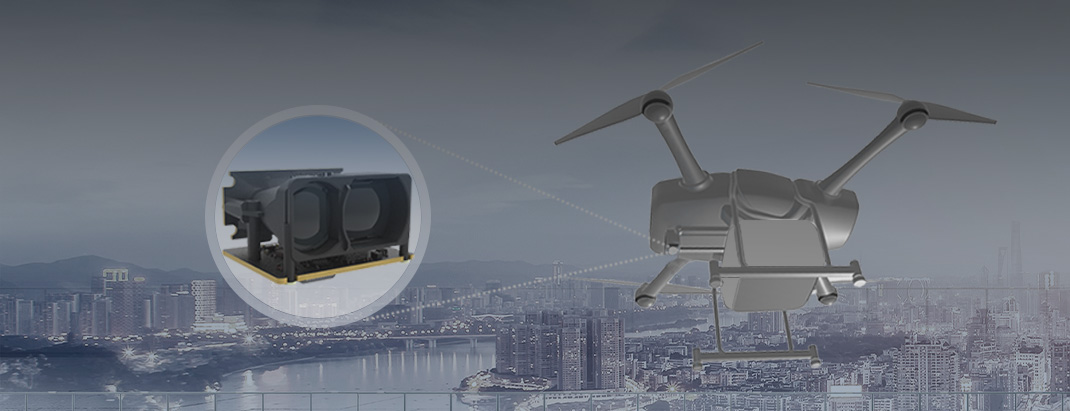
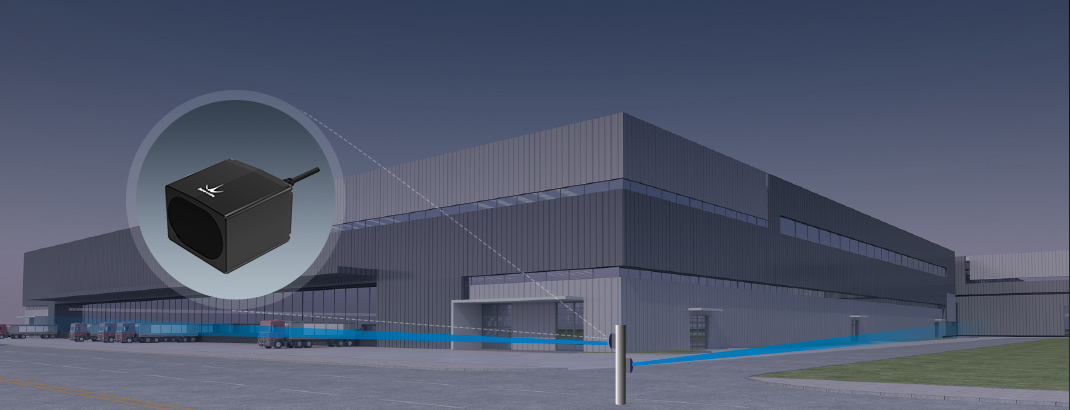
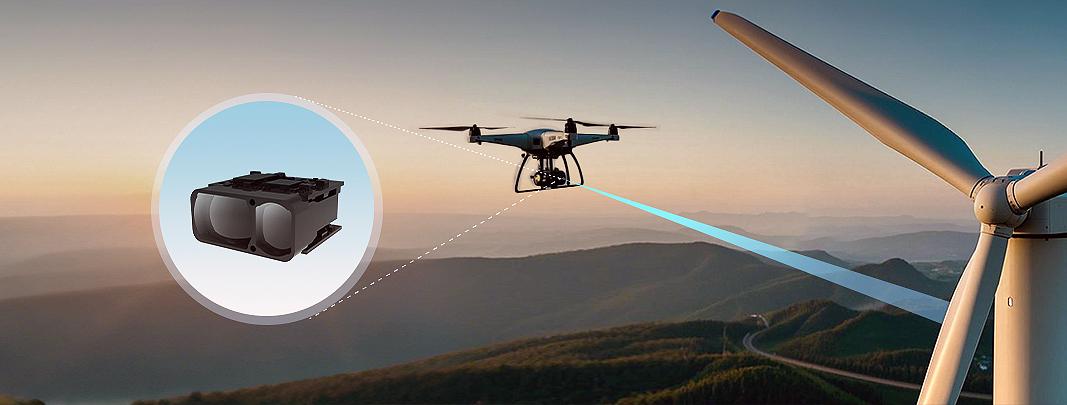
Industrial UAVs operate across a range of demanding applications where LiDAR is a mission-critical sensor rather than a supplementary safety feature. The sensor failure has direct operational consequences.
l Precision Terrain Following: Agricultural and surveying drones flying over hills, valleys, or open-pit mines require real-time, centimeter-level altitude data to maintain consistent ground sampling distance (GSD). Without an accurate and stable altitude reference, data quality degrades, and repeat flights are required.
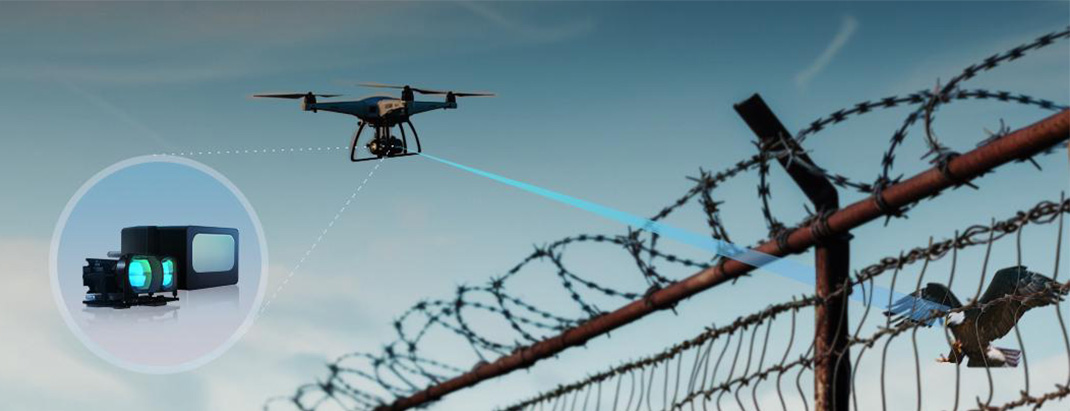
l Complex Obstacle Avoidance: Inspection drones navigating power lines, bridge structures, or confined corridors depend on accurate forward distance measurement, because the flight controller uses this data to calculate avoidance trajectories.
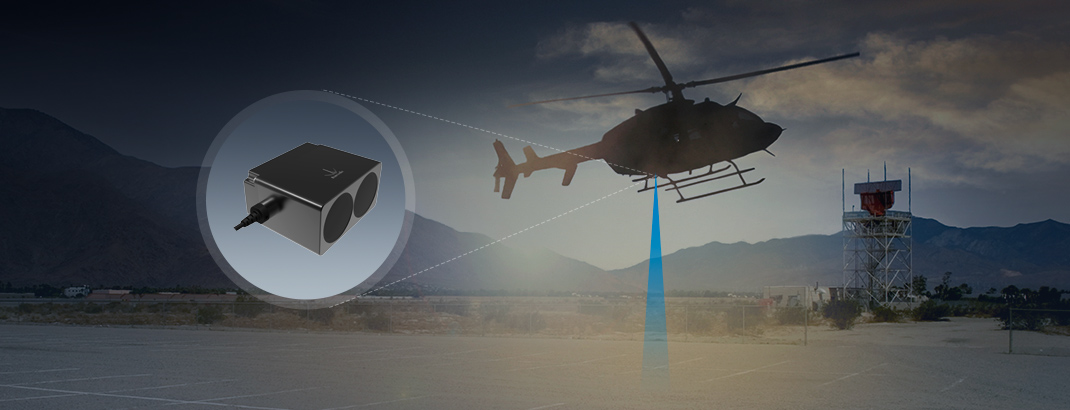
l Autonomous Takeoff and Landing: On mobile platforms or in GPS-denied environments, altitude-above-ground data from LiDAR sensors is a critical reference for high-precision autonomous landing.
l Gimbal Synchronization: Zoom cameras mounted on stabilized gimbals use LiDAR distance output to drive autofocus in real time. Latency or instability in the distance data directly degrades image sharpness during dynamic flight.
l Low-Reflectivity Detection: Industrial sites such as coal yards, tunnels, and underground mines present surfaces that absorb rather than reflect light. Drone LiDAR sensors must maintain effective ranging on these surfaces, a condition that consumer-grade sensors can not meet.
Consumer models focus on performance in favorable weather and moderate lighting. Their LiDAR sensors perform adequately under these conditions but degrade in strong sunlight, rain, dust, or electromagnetic interference.
Industrial UAVs operate in direct sunlight, through dust and light precipitation, under temperature extremes, and in electromagnetically noisy environments generated by high-current power systems and radio equipment.
DO-160G certification is the practical threshold, as it verifies resistance to vibration, temperature range, humidity, and electromagnetic interference under aviation-grade test conditions.
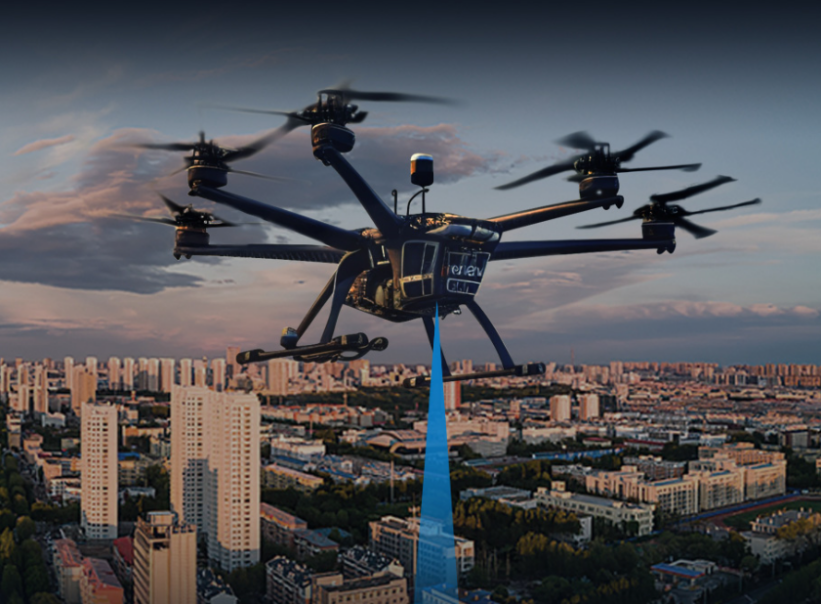
Consumer-grade LiDAR is designed for short-duration, low-duty-cycle operation and has two main shortcomings.
l Prolonged use can lead to measurement drift due to heat buildup, with deviations potentially reaching several centimeters (Measurement Drift).
l Its overall lifespan is also relatively short.
However, for brief flight missions, these limitations do not cause significant issues. The operator can keep the aircraft within visual line of sight and land it immediately if any anomaly is detected.
Industrial-grade LiDAR is specifically built for long-endurance, high-frequency operations, where data must remain consistent and repeatable at all times.
To achieve this, the unit typically integrates a precision temperature compensation solution to ensure accuracy remains stable from takeoff to landing.
Additionally, it employs higher-specification laser emitters and thermal modules, enabling thousands of hours of continuous high-intensity operation. This reduces long-term maintenance frequency and total cost of ownership.
Consumer drones fly at moderate speeds in predictable environments. A low sampling rate is sufficient because obstacles change position slowly relative to flight speed, and the operator can intervene if necessary.
Industrial drones, however, travel at high speeds, so obstacle avoidance systems must respond effectively to sudden hazards.
If the LiDAR's refresh rate is too low, the interval between updates becomes too long, and the flight controller cannot compute and execute an evasive maneuver in time.
Consumer drone LiDAR connects through simple serial interfaces with basic integration. Industrial LiDAR supports standard protocols including CAN and RS-485. These protocols enable deep integration with flight controllers and various mission payloads.
Without these interfaces, integration requires custom workarounds that introduce additional failure points and extend development timelines.

As a professional drone LiDAR manufacturer, we are committed to providing comprehensive sensing solutions for both consumer and industrial applications.
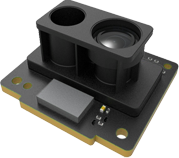
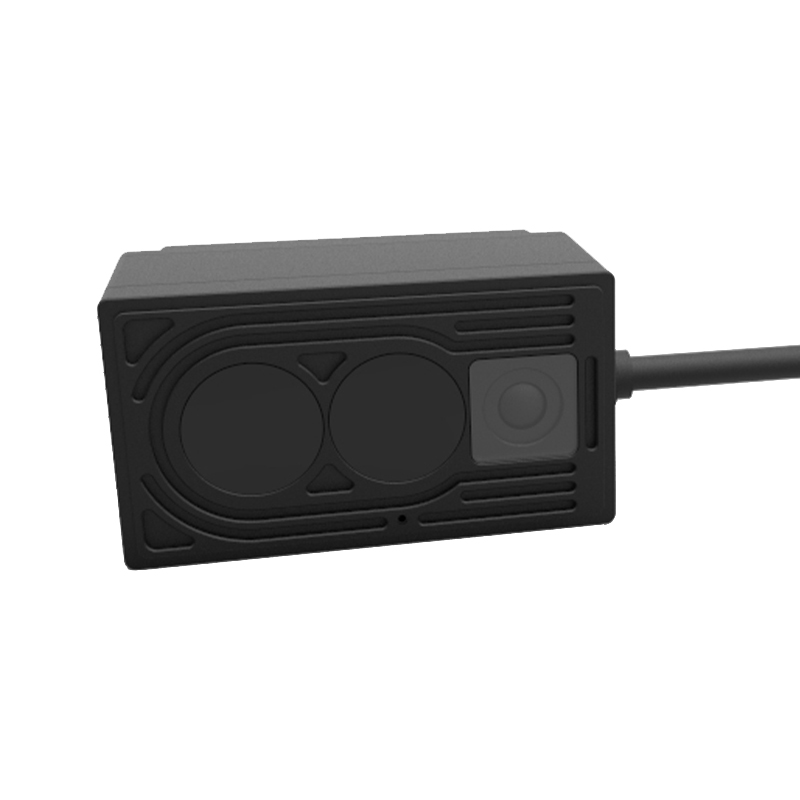
l TF-Luna: Engineered for minimal weight, this model weighs under 5g. It delivers 1cm resolution across a detection range of 0.2m to 8m. With its accurate and responsive sensing combined with a highly competitive price point, the TF-Luna is the go-to choice for educational drones, DIY builds, and low-cost obstacle avoidance systems.
l TFmini-S / TFmini Plus: While retaining an ultra-compact form factor, these sensors offer significantly improved stability under strong outdoor lighting. They boast a measurement range of up to 12m and a refresh rate of 1000Hz, enabling real-time, stable altitude holding and collision avoidance for drones.
Our industrial-grade sensors utilize multi-wavelength filtering and advanced signal processing algorithms to maintain a high signal-to-noise ratio even under intense light. With multi-echo technology, these devices can effectively penetrate through gaps in vegetation, light rain, fog, or dust to extract true target data.
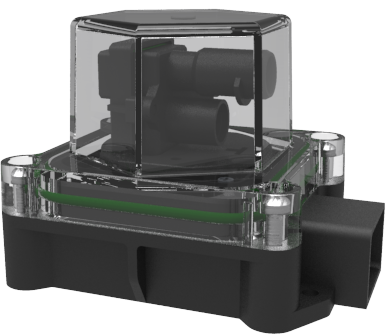
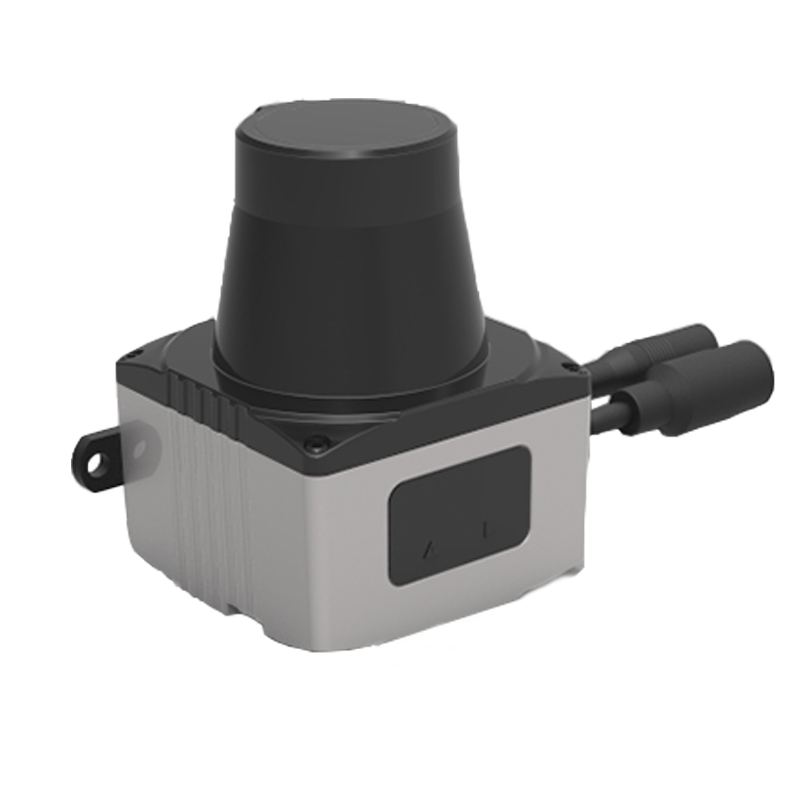
l TFA300 Series: Featuring a data refresh rate of up to 10,000Hz, this series precisely enables autofocus assist for EO/IR gimbals or high-speed dynamic obstacle avoidance for search and rescue drones.
l TFA170-L: The sensor is certified to DO-160G standards for aviation-grade reliability. This model delivers centimeter-level precision at long distances (up to 170m) while minimizing payload strain on the drone.
Additionally, its multiple built-in operating modes allow users to flexibly adjust parameters and configure according to mission requirements.
Choosing the right LiDAR for a drone platform requires matching specifications to actual mission requirements. Benewake provides LiDAR solutions for both consumer and industrial applications. Contact Benewake for application-specific recommendations and integration support.