
















Headquarters:3rd Floor, Haiguo Jiaye Sci-Tech Park, Haidian District, Beijing, China

We use cookies to enhance your browsing experience and serve personalized content.
Reject ALL
Accept ALL


2026-03-26
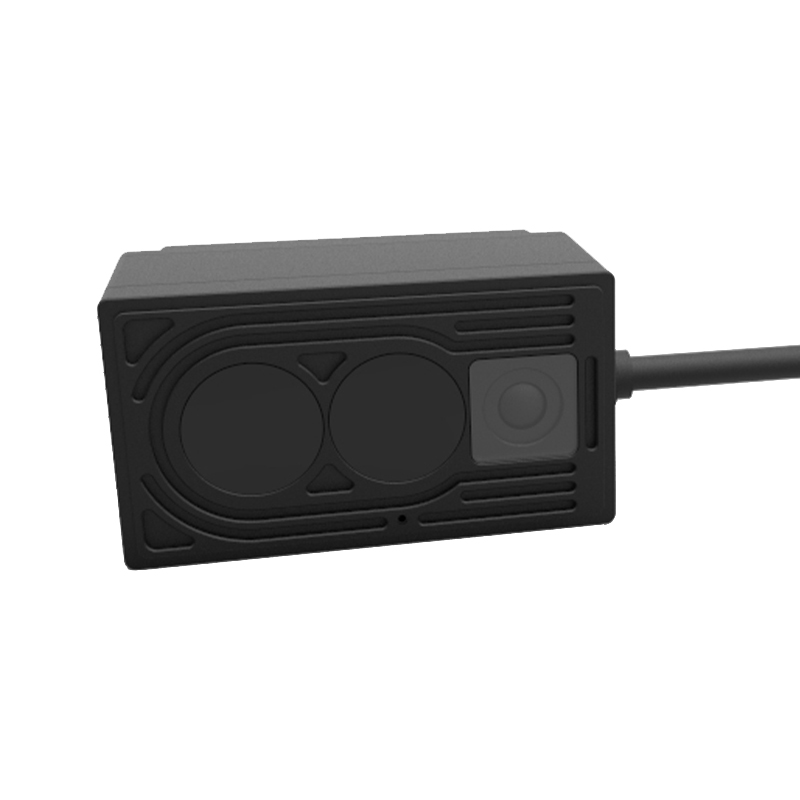
At Benewake, we develop lidar solutions designed to enhance vehicle perception and safety. LiDAR, which stands for Light Detection and Ranging, is an essential component of Advanced Driver Assistance Systems (ADAS). It allows vehicles to detect and map their surroundings in three dimensions, supporting functions like collision avoidance, adaptive cruise control, and pedestrian detection. Automotive lidar can generally be categorized into mechanical and solid-state types. Mechanical lidar relies on rotating parts to scan the environment, capturing wide-area data. Solid-state lidar, such as our AD2-S-X3 lidar, uses no moving parts, making it more compact, reliable, and easier to integrate into modern vehicles.
Advantages of Solid-State LiDAR
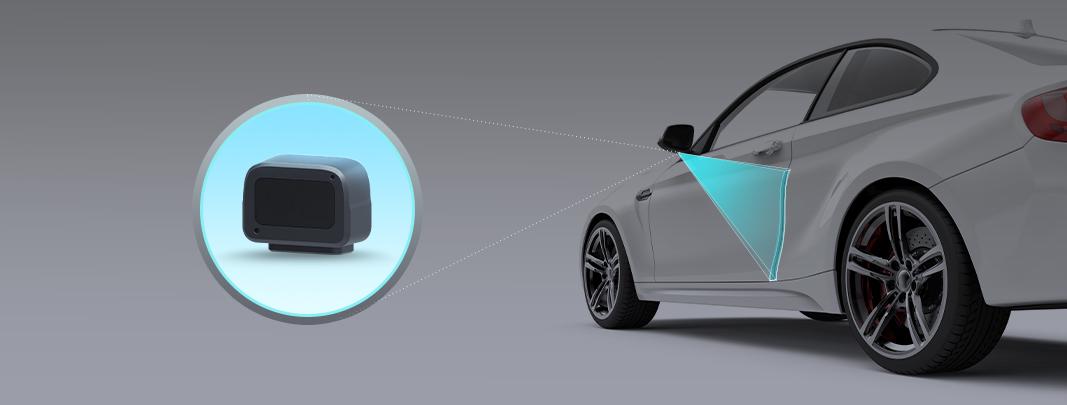
Solid-state lidar offers distinct advantages for automotive applications. Without rotating components, solid-state devices are less prone to mechanical wear, lowering maintenance requirements and improving long-term durability. The AD2-S-X3 lidar provides consistent performance under various driving conditions, including rain, dust, or vibrations commonly encountered on highways and urban streets. Its compact design enables seamless installation in vehicle exteriors without affecting aerodynamics. Additionally, solid-state lidar consumes less power than mechanical systems, which is an important factor in electric and hybrid vehicles where energy efficiency is critical.
Comparing Mechanical and Solid-State LiDAR
Mechanical lidar is known for its wide scanning angles and extended detection range, which can be advantageous in some scenarios such as highway driving. However, the moving parts increase the risk of mechanical failure and can require regular maintenance. Solid-state lidar, like Benewake lidar, offers precise measurements and faster frame rates while eliminating moving components. This leads to more reliable and consistent data for ADAS functions. Modern vehicles benefit from solid-state lidar's compact form, efficient power usage, and ability to integrate smoothly with other sensors. For applications that prioritize space, reliability, and long-term stability, solid-state lidar provides clear advantages.
Why Choose Benewake Lidar
At Benewake, we design our lidar products to meet automotive safety standards while offering high performance. The AD2-S-X3 lidar combines the reliability of solid-state technology with accurate environmental sensing. It supports critical ADAS features such as obstacle detection, emergency braking, and lane-keeping assistance. By selecting Benewake lidar, automotive developers can rely on a system that is both durable and precise, while being easy to integrate into a variety of vehicle platforms.
Conclusion
Mechanical and solid-state lidar each have their strengths, but for efficient, reliable, and compact integration into automotive ADAS systems, solid-state lidar like the AD2-S-X3 from Benewake is an ideal choice. Its durability, accuracy, and adaptability make it suitable for urban, suburban, and highway driving scenarios. We invite engineers and developers to explore Benewake lidar solutions and see how the AD2-S-X3 lidar can enhance vehicle safety and perception capabilities. Discover the potential of Benewake lidar and bring advanced sensing technology to your automotive projects.