















Headquarters:3rd Floor, Haiguo Jiaye Sci-Tech Park, Haidian District, Beijing, China

We use cookies to enhance your browsing experience and serve personalized content.
Reject ALL
Accept ALL


2026-06-03
In agriculture, construction, and mining, material level detection has traditionally relied on manual on-site checks and crude estimates. These legacy methods are fraught with inaccuracy and significant physical risk.
The article explores the core pain points of manual silo inspection and explains how our Benewake LiDAR sensors redefine safety, efficiency, and data intelligence in bulk material level monitoring.
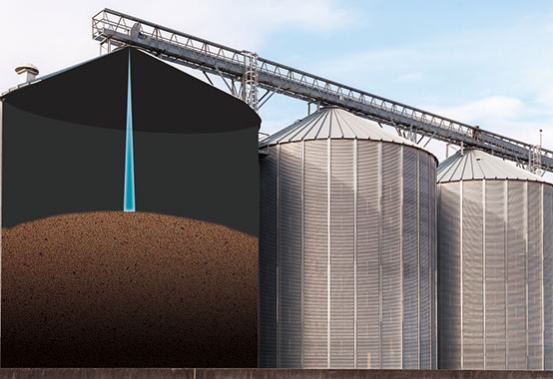
Despite decades of technological advancement, many facilities still depend on manual inspection cycles to assess material levels inside silos. This approach introduces three systemic problems that compound over time.
Climbing high-altitude silos, often reaching tens of meters in height, exposes workers to a high risk of falls. Adverse weather conditions, like rain, high winds, and snow, dramatically increase hazard levels, and worker fatigue during repetitive inspection rounds further elevates the danger.
Occupational safety incidents in silo environments remain a persistent liability for operators, with regulatory bodies increasingly demanding risk mitigation measures that manual inspection simply cannot provide.
Manual observation is inherently subjective. A worker peering into a dark silo can only provide a rough estimate of the material’s shoulder or cone, leading to significant discrepancies.
More critically, periodic spot-checks cannot achieve real-time or continuous level detection, meaning abnormal changes such as material bridging, sudden drawdown, or overfill conditions may go undetected for hours or days, creating both safety and operational risks.
Relying on manual labor is expensive and inefficient. Beyond the direct wages of inspection crews, the indirect costs of inaccurate data are even higher.
Delayed or incorrect inventory information leads to inefficient replenishment planning, resulting in either costly emergency deliveries to prevent stockouts or excessive overstocking that ties up valuable capital.
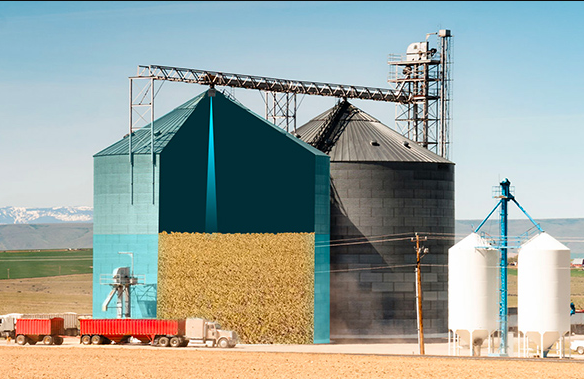
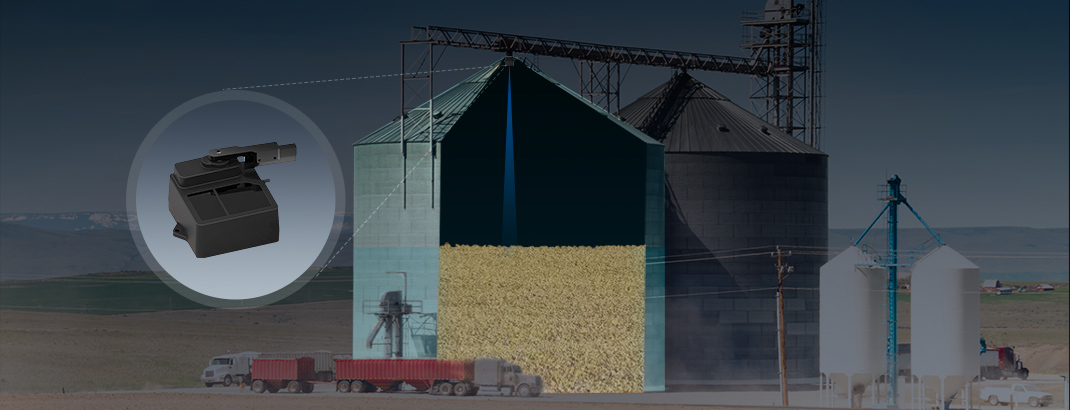
Our silo-level monitoring LiDAR sensors are purpose-built to address each of the pain points described above by combining precision measurement, ruggedized hardware, and flexible connectivity.
Our Benewake LiDAR sensors provide real-time height measurements with an error of less than 1%.
Unlike ultrasonic sensors, which can be deflected by the internal geometry of a silo or affected by temperature fluctuations, the narrow laser beam ensures a precise point of measurement. This allows for a granular understanding of material volume, even when the surface is uneven.
Whether it is a narrow feed bin or a massive industrial grain terminal, our Benewake LiDAR sensor solutions are compatible with a wide range of silo types.
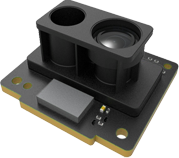
The narrow FoV design (TF-Luna: 2°; TF02-Pro-W: 3°) ensures that the laser beam reaches deep into confined spaces without interference from sidewalls.
Combined with a detection range spanning from 0.1m to 350m, depending on the model, these sensors can be deployed in applications ranging from small-scale processing tanks to the deepest mining shafts.
For full cross-sectional coverage of large-diameter silos, multiple sensor configurations are recommended.
High-dust environments, common in cement, grain, and mineral processing facilities, are a perennial challenge for optical sensing equipment.
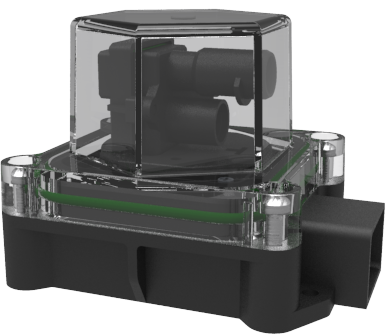
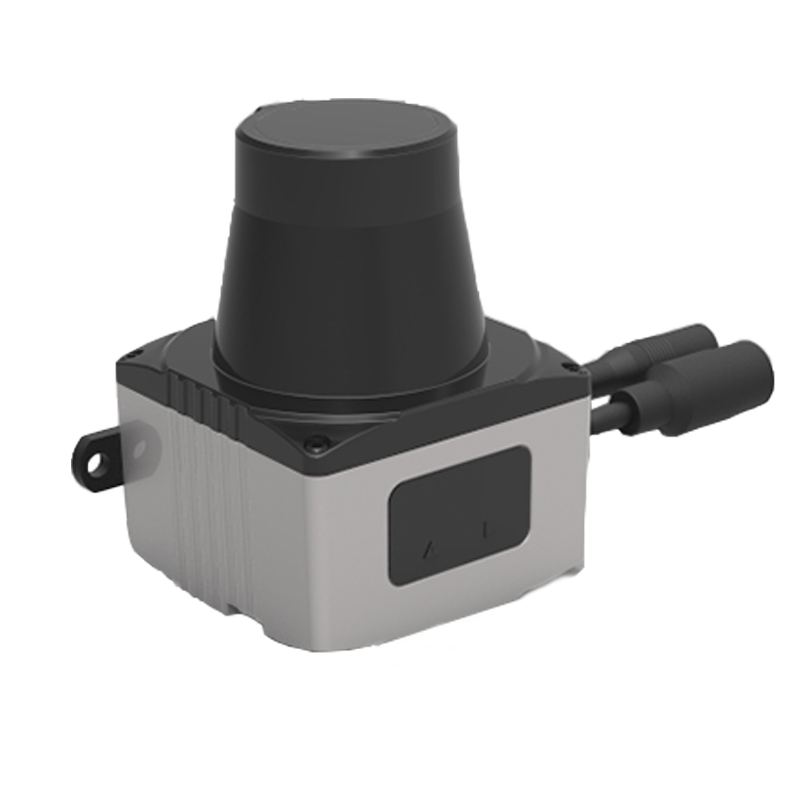
Our Benewake LiDAR sensors solve this challenge with an integrated self-cleaning dust wiper, which automatically removes dust from the lens aperture, maintaining measurement integrity even in dense particulate conditions. This design saves manual cleaning costs and prevents signal degradation.
Infrastructure in remote areas or large farms often lacks easy access to the power grid. Benewake sensors, such as TF-Luna, feature ultra-low power consumption of 1.5mW. For reference, a single 10,000mAh battery can power the device for up to 3.3 years, making it an ideal solution for off-grid installations where frequent battery changes would be impractical.
One of the biggest hurdles to modernizing old silos is the cost of cabling. Our Benewake LiDAR models support wireless deployment, eliminating the need for complex, expensive manual cabling. This facilitates a rapid installation across an entire facility in a fraction of the time.
In agricultural settings, continuous and accurate detection of material levels in grain and animal feed silos enables fully automated inventory management and replenishment planning.
Operators receive real-time alerts when stock falls below reorder thresholds, preventing feed shortages that could disrupt livestock operations or grain processing schedules.
The removal of manual inspections also decreases labor costs for large-scale farms and cooperatives that manage multiple storage facilities.
Construction and mining operations deal with highly abrasive, high-dust materials (cement, sand, aggregate, and ore). The dust-resistant design and wide detection range make Benewake LiDAR sensors ideal for material level measurement in these harsh environments.
Accurate, real-time inventory data improves material turnover rates, reduces idle time, and supports tighter integration between material supply and production scheduling without the risk of overfilling or empty-running.
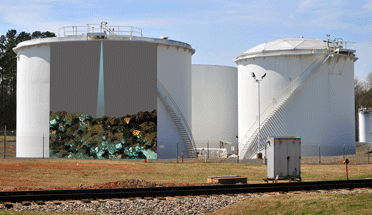
For food-grade storage, including flour, sugar, powdered ingredients, and specialty grains, non-contact measurement is not merely convenient but essential for food safety.
Manual inspection requires opening hatches, which invites external contaminants, moisture, and pests into the silo. Mounted at the top and never touching the material, the sensor prevents secondary contamination.
Manual silo inspection presents clear risks to personnel safety, data accuracy, and operational cost.
Our Benewake LiDAR sensors transition the industry from educated guesses to precision-driven automation through precision measurement, dust-resistant design, low power consumption, and wireless deployment.
Ready to optimize your material monitoring infrastructure? Contact us for application-specific recommendations and integration support.