















Headquarters:3rd Floor, Haiguo Jiaye Sci-Tech Park, Haidian District, Beijing, China

We use cookies to enhance your browsing experience and serve personalized content.
Reject ALL
Accept ALL


Near-Field Sensing with the NOVA20 Solid-State Multi-Point Line LiDAR
The solid-state NOVA20 near-field multi-point line LiDAR can be installed at the front or side of a robotic mower. Working alongside a primary LiDAR and camera, it provides multi-point distance data for near-field areas below the primary LiDAR scan plane. Its 20 ranging channels operate in a true vertical scan plane, providing input for boundary-following, low-profile obstacle detection, and drop-off-risk assessment, helping optimize mowing paths around walls, fences, and flowerbed edges.
1.More complete coverage than a single-point solution
NOVA20 provides 20 ranging channels across a 40° fan-shaped field of view, with the end-channel center directions spanning −20° to +20°. At a typical 10 Hz setting, it measures distance changes at multiple near-field positions with centimeter-level precision. Unlike a single-point solution that senses only one position, NOVA20 forms a vertical sampling band that captures distance data at different heights. As the mower moves, these consecutive measurements extend near-field spatial coverage.
2.Closer edge following and more direct drop-off information
The mower can use this near-field input when operating close to walls, fences, and flowerbed edges, helping reduce uncut strips left along boundaries. Near a stair edge, sunken patio, pool, or other drop-off, measured points may transition from nearby ground to a more distant lower surface, or return weak or invalid signals. Together with neighboring channels and consecutive frames, the system can use these changes as more direct distance input for assessing ground continuity.
3.Adapted to highly reflective targets and bright light
For highly reflective targets and high-illumination scenes, NOVA20 provides multi-point near-field distance data that the vehicle can combine with neighboring channels, consecutive frames, and return-signal strength for robust decisions. Under the specified condition of a 10% reflectivity target at 100 klux ambient light, the product has a 1 m measurement capability. Effective range and data performance must be validated at vehicle level for the target material, incidence angle, mounting position, and local lighting.
4.Compact, low-power, and easy to integrate
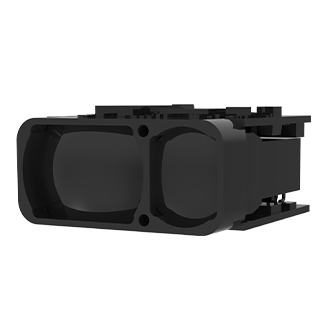
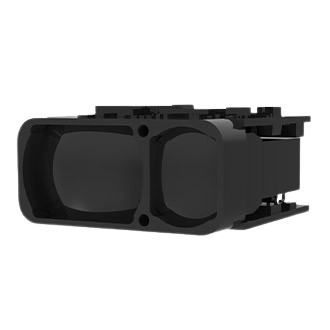
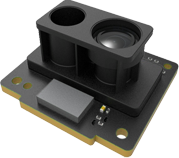
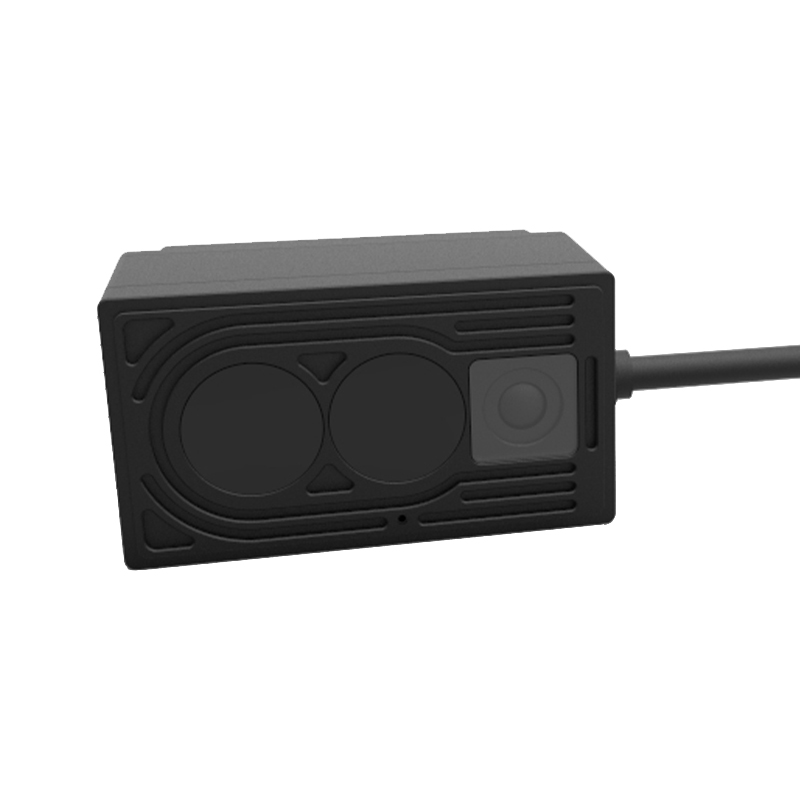
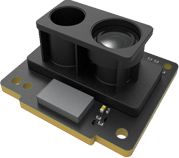
NOVA20 uses a fully solid-state architecture with no moving parts. Its typical dimensions are no greater than 25 × 21 × 14 mm, excluding enclosure; it weighs less than 3 g and consumes less than 1 W on average. The module is supplied without an enclosure and carries no stated IP rating. OEMs can design the enclosure, optical opening, and sealing for their target protection level, then confirm performance through vehicle-level testing. Mounting position and angle should be evaluated for each mower structure and sensing requirement.
Solid-State
20-Channel Line Array
Centimeter-Level Precision
Multi-Point Distance Data
100 klux Test Condition
<3 g
<1 W
Direct UART Output
1.Cleaner edge cutting
Open lawns are straightforward to mow, but grass strips can remain along walls, fences, and flowerbed edges. NOVA20 provides near-field distance input that helps the control strategy assess boundary distance and optimize edge-following paths. Actual cutting coverage also depends on blade-disc layout, vehicle control, and lawn conditions.
2.Less intervention in complex gardens
Low-profile obstacles, steps, pools, and other drop-offs can increase the risk of a mower becoming stuck, colliding, or falling. NOVA20 supplies near-field distance information for the controller to use with its sensor configuration, control strategy, and actuators when deciding whether to slow down, detour, or stop. Risk-control performance must be verified at vehicle level.
3.Lower integration burden
NOVA20 does not output images. It sends distance, signal strength, and channel number directly to the lower-level system over UART, avoiding image capture and model training while leaving compute resources available for higher-level functions. Its compact, lightweight, low-power design gives OEMs greater freedom in vehicle design.
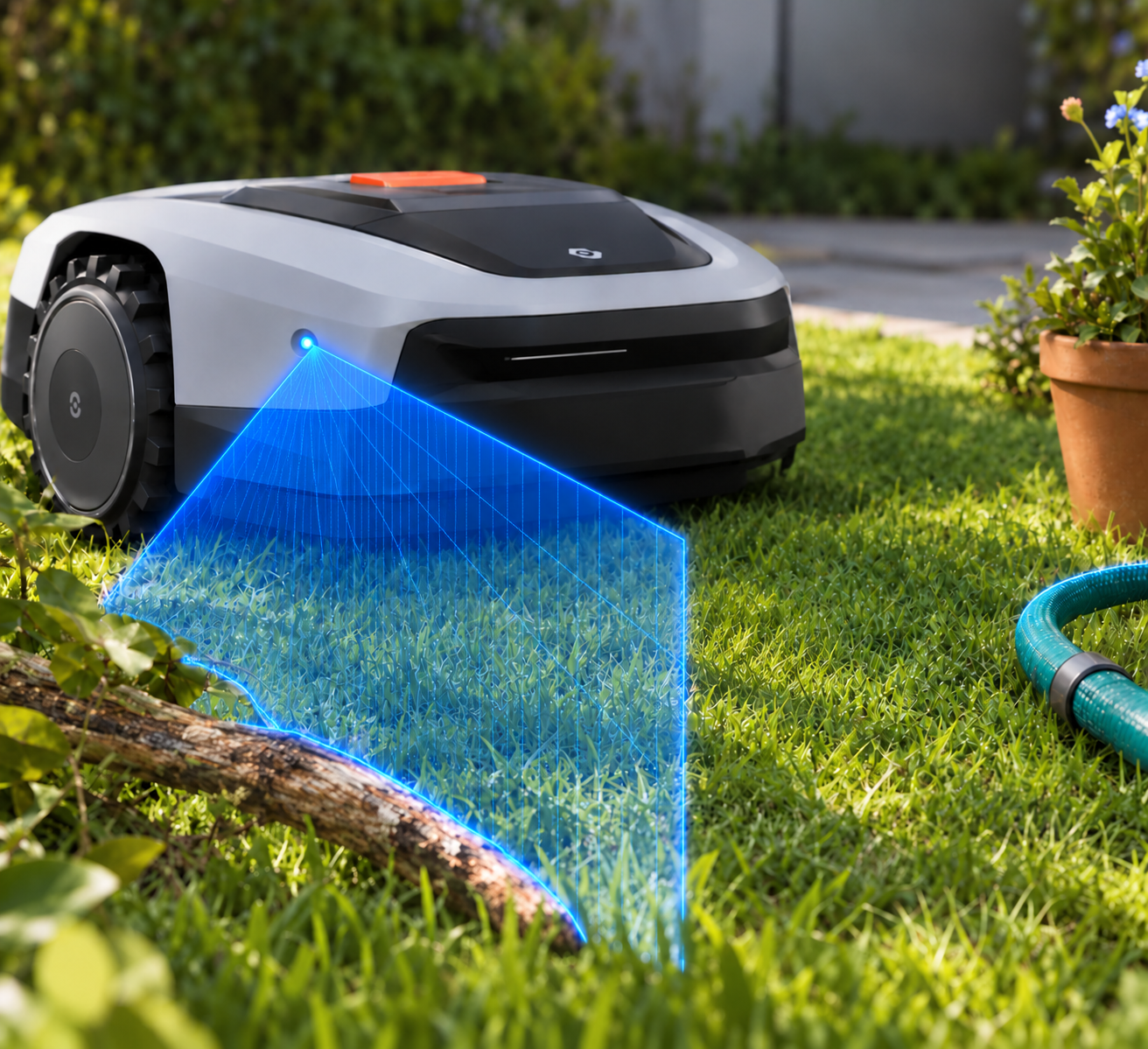
Low-profile obstacles below the primary LiDAR scan plane can pose a near-field sensing challenge.

NOVA20 edge-following application illustration
NOVA20 can be installed at the front or side of a robotic mower, with the module placed inside the vehicle enclosure. The optical opening must not obstruct the transmitter or receiver windows. Its line-array scan plane is oriented vertically to cover the near-field area; the final mounting position, angle, and optical-opening design should be evaluated for the vehicle structure and sensing requirements.
The system comprises three main elements: the NOVA20 near-field LiDAR, the primary sensing system, and the vehicle control system.
NOVA20 near-field LiDAR: Provides distance information from 20 channels in a true vertical scan plane. The frame rate can be configured for the application. The host organizes multi-point data by channel number and combines consecutive frames to form a near-field distance slice. Typical precision is ≤3 cm (1σ); minimum detection distance depends on the current specification and integration conditions.
Primary sensing system: The vehicle may use a primary LiDAR, camera, or other sensors for navigation and environment understanding. NOVA20 supplements near-field distance information; the sensing allocation is defined by the vehicle solution.
Vehicle control system: The controller receives distance, signal strength, and channel number through UART, and can use neighboring channels and consecutive frames as input for judging boundary distance, low-profile obstacles, and ground drop-offs. Deceleration, detouring, stopping, and drop-off protection are jointly delivered by the sensor configuration, control algorithms, strategy, and actuators, and require vehicle-level validation.

Multi-point near-field distance data can provide the vehicle with input for boundary and obstacle assessment.
Specified measurement capability and near-field precision
Under the specified condition of a 10% reflectivity target at 100 klux ambient light, measurement capability is 1 m. Minimum detection distance, effective range, and data performance require validation for the target material, mounting position, and site conditions.
Multiple channels and vertical coverage
20-channel line array with a 40° field of view (angle between end-channel center directions); 5 / 10 / 25 / 50 Hz configurable frame rate; distance information is acquired at different heights in a vertical scan plane.
Compact and easy to integrate
Typical dimensions of 25 × 21 × 14 mm, <3 g, and average power consumption of <1 W; fully solid-state with no moving parts; UART output of distance, signal strength, and channel number (supports ROS, Linux, and Windows).
Measurement capability in bright-light conditions
Measurement capability is specified under the 100 klux test condition; actual data quality must be assessed for target reflectivity, incidence angle, and local illumination. Operating temperature: −20°C to +55°C; 905 nm VCSEL source; Class 1 eye-safe.