














Headquarters:3rd Floor, Haiguo Jiaye Sci-Tech Park, Haidian District, Beijing, China

We use cookies to enhance your browsing experience and serve personalized content.
Reject ALL
Accept ALL


2026-03-26
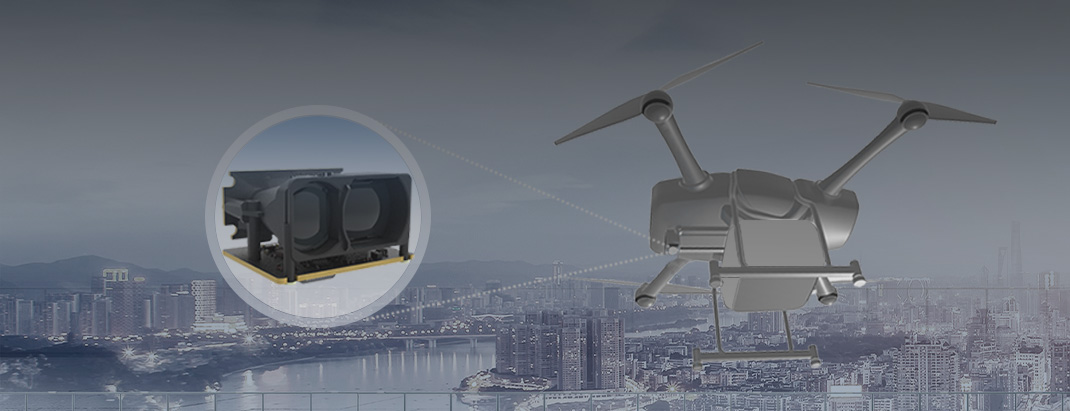
For many drone applications, maintaining a stable altitude is essential for flight performance, safety, and mission success. A reliable altitude control system helps the flight controller adjust motor output as the drone hovers, ascends, or descends. Two common sensing technologies used for altitude control are ultrasonic sensors and LiDAR for drone systems. Each has distinct characteristics and may suit different environments and performance expectations. At Benewake, we apply LiDAR technology in sensors that provide precise distance measurements to support consistent altitude control in a range of drone applications.
How Ultrasonic Sensors Work
Ultrasonic sensors estimate distance by emitting sound waves toward the ground and listening for their echo. The time it takes for the echo to return is proportional to the distance between the sensor and the surface below. These sensors are often attractive because they are relatively low cost and simple to use. They work reasonably well when the surface below reflects sound waves consistently and the environment is free of significant noise.
However, ultrasonic sensing has constraints. The performance of these sensors can vary depending on the surface texture, presence of foam or vegetation, and surrounding noise. For instance, if the ground surface is irregular or soft, sound waves may scatter, leading to imprecise readings. Ultrasonic sensors may also struggle in environments with strong wind or ambient noise that interferes with sound wave propagation. In such cases, the drone's altitude control may be less smooth or require additional filtering to maintain stable hover.
How LiDAR for Drone Altitude Control Works
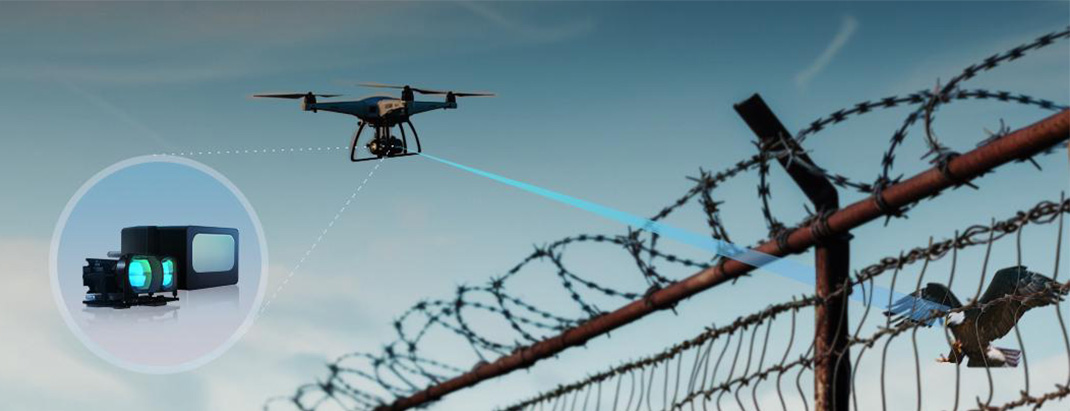
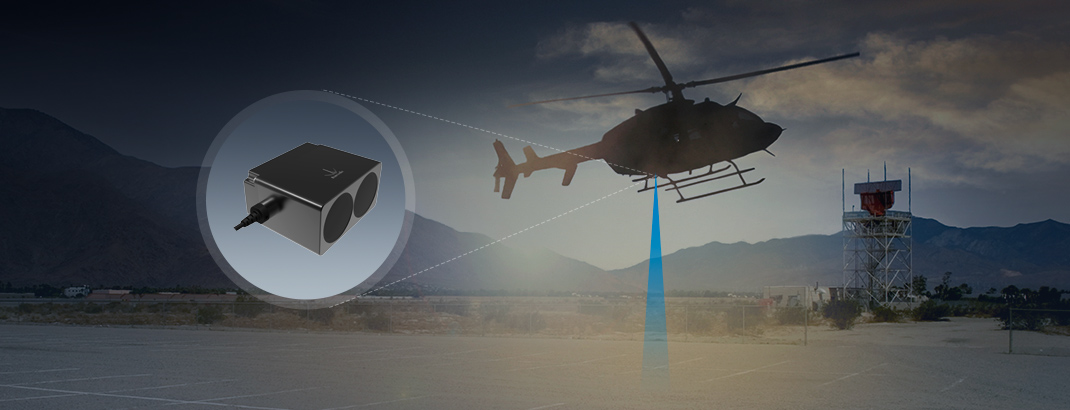
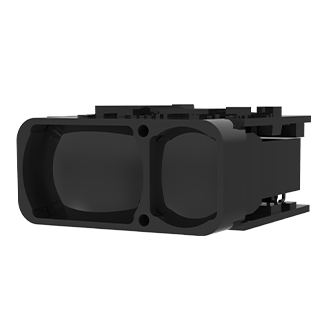
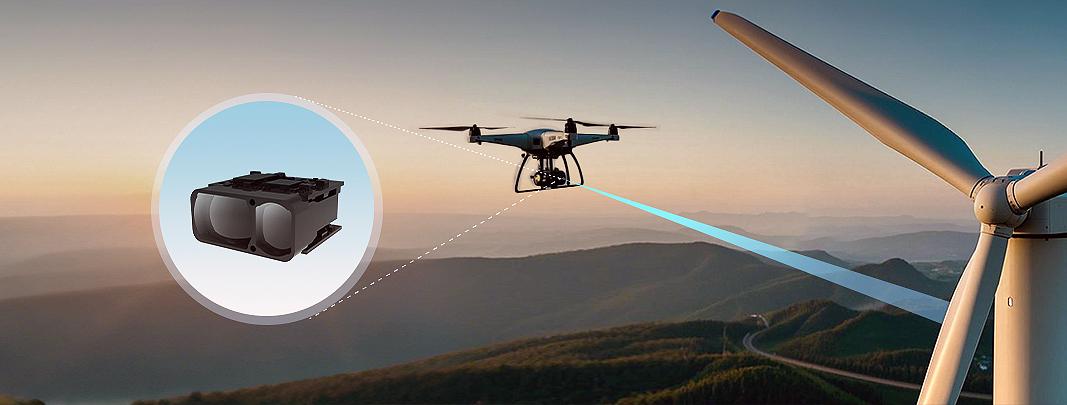
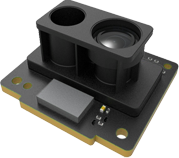
LiDAR for drones, including systems we develop at Benewake, uses laser pulses to measure altitude. A LiDAR sensor sends pulses of light toward the ground and calculates the time it takes for the reflected light to return. This method, often called time-of-flight, provides direct distance measurements that are generally less affected by surface texture, wind, or environmental noise than sound-based systems.
LiDAR sensors can deliver centimeter-class accuracy and fine resolution across a range of altitudes. Sensors like those from Benewake offer high refresh rates and stable performance whether flying over flat terrain, vegetation, or industrial structures. These qualities allow the flight controller to receive frequent, precise altitude data and adjust motor commands to maintain desired height with minimal drift.
In contrast to ultrasonic sensors, LiDAR can operate effectively in a wider range of conditions. Because light travels much faster and is less prone to interference from ambient sound, the sensor's data quality supports smoother and more responsive altitude control. LiDAR sensors also perform well in brighter or darker conditions without significant recalibration.
Choosing the Right Sensor for Your Drone
If your drone will operate in relatively calm environments at very low heights, ultrasonic sensors may serve as a simple solution for basic altitude detection. For more demanding missions such as mapping, inspection, or logistics where altitude changes must be tracked precisely and reliably, LiDAR for drone altitude control, like the solutions we build at Benewake, offers dependable measurement quality. LiDAR's ability to provide frequent, accurate distance readings supports stable hover, safer flight patterns, and better adaptability to changing ground conditions.
Conclusion
Both ultrasonic and LiDAR sensors have roles in drone altitude control, but they differ in how they measure distance and perform in varied environments. LiDAR for drone systems tends to deliver more consistent and precise altitude data across diverse conditions, while ultrasonic solutions might fit simpler or low-cost use cases. At Benewake, we focus on LiDAR technologies that provide high-resolution altitude information and support robust control systems for UAVs of many types.
If you want to explore how LiDAR can enhance altitude control for your drone projects or find the right sensor for your application, check out our full range of Benewake solutions and see how precise distance sensing can improve flight stability and performance.