














Headquarters:3rd Floor, Haiguo Jiaye Sci-Tech Park, Haidian District, Beijing, China

We use cookies to enhance your browsing experience and serve personalized content.
Reject ALL
Accept ALL


2026-03-26
For unmanned aerial vehicles, maintaining a consistent height above ground level is essential when flying over uneven surfaces such as hills, valleys, forests, or man-made terrain. Drone terrain following refers to the ability of a UAV to adjust its altitude in real time as the landscape beneath it changes. Rather than flying at a fixed altitude relative to sea level, terrain following keeps the drone at a set height above the actual surface below it. This capability supports safer and more effective missions in many real-world use cases.
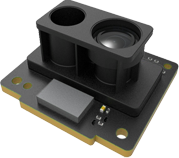
At Benewake, we build LiDAR solutions that provide reliable distance data essential for terrain following and other advanced UAV functions. When paired with a capable flight controller, these sensors enable drones to understand their height above ground and respond smoothly to changes in elevation.
How LiDAR Enables Terrain Following
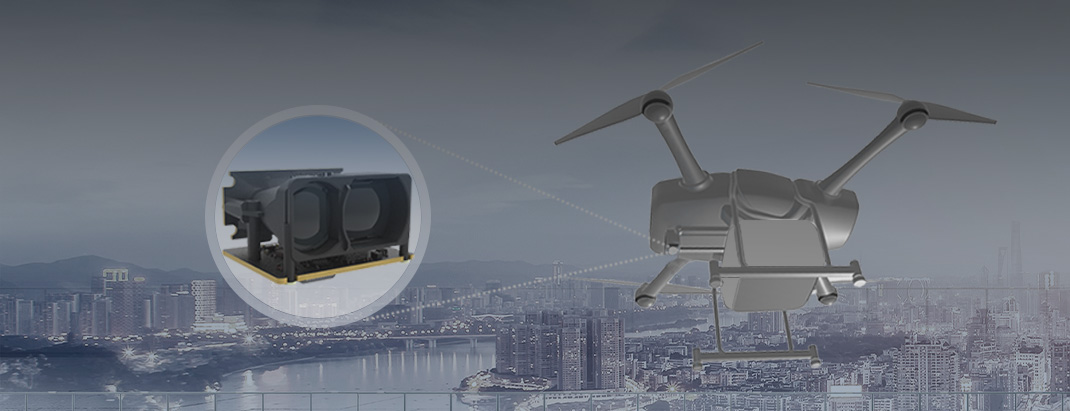
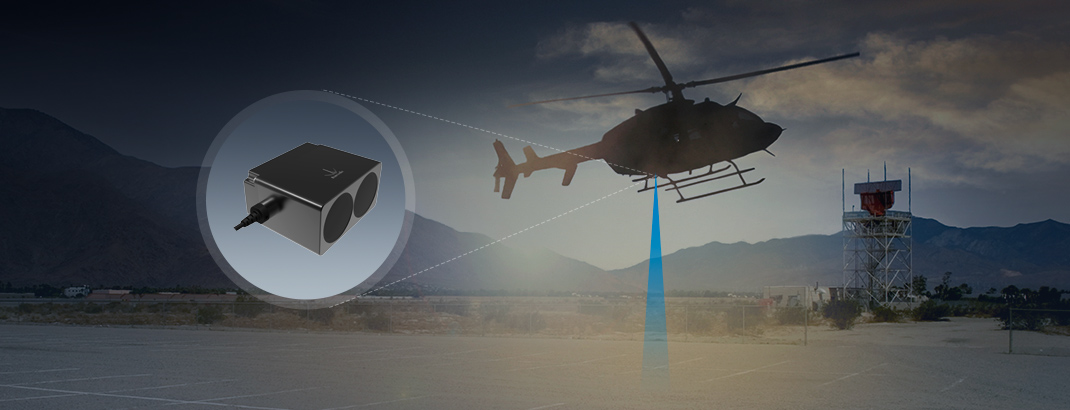
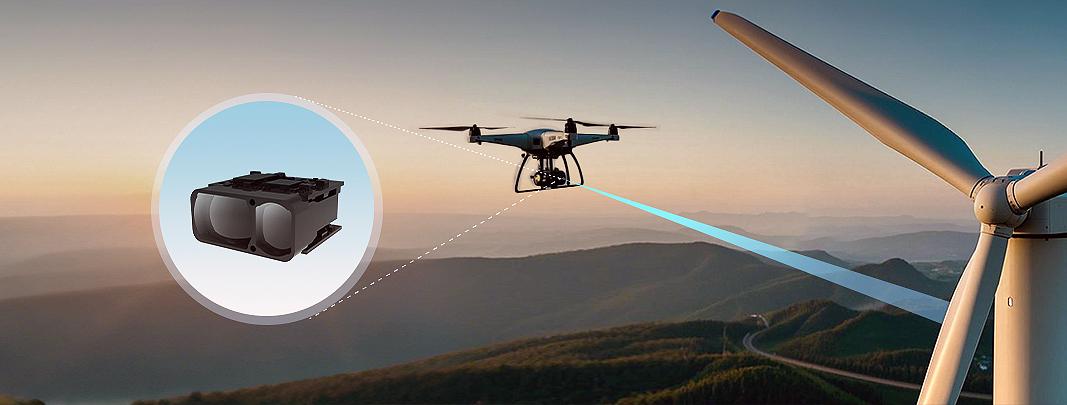
A Benewake lidar sensor mounted on the underside of a drone measures the precise distance to the ground by emitting laser pulses and recording the return time. This information translates into accurate altitude above ground level data. Unlike barometers and GPS, which can be subject to drift, delays, or limitations in steep or complex terrain, LiDAR provides direct height measurements in real time.
As terrain changes beneath the UAV, the flight controller continuously compares the measured distance with the intended height above ground. If the drone approaches a rising slope, the controller increases throttle to maintain the preset height. Conversely, it decreases throttle over downward slopes. This continuous adjustment helps keep flight smooth and prevents unintentional altitude deviations.
Practical Uses in Agriculture
Precision agriculture is one of the areas where terrain following brings notable benefits. When drones are used for spraying or sensor mapping, maintaining a constant height above crops improves uniformity and effectiveness. Without terrain following, a drone might fly too high over hills and too low over valleys, which could result in inconsistent spray patterns or variable data quality. By integrating a Benewake lidar sensor, UAVs can respond dynamically to ground variation and maintain optimal working height throughout the mission.
Enhancing Surveying and Mapping
Terrain following also plays an important role in survey missions where close-to-ground measurements improve data resolution. Keeping constant height above ground allows drones to capture detailed topographic or structural information without gaps caused by altitude fluctuations. This level of precision is particularly useful in environmental monitoring, civil engineering, and forestry management projects.
By using a downward-facing Benewake lidar sensor, drones can operate safely at lower altitudes while gathering high-resolution spatial data. The real-time feedback from the sensor supports accurate control and minimizes the likelihood of accidental ground contact or sudden altitude changes.
Safety and Automated Flight Control
In addition to mission performance, terrain following contributes to safer flights. Flying over uneven ground without real-time height data can increase the risk of collisions, especially in areas with abrupt changes in elevation. When a LiDAR sensor continuously informs the flight control system about terrain below, the UAV can adjust proactively rather than reacting only after stabilization issues occur.
This capability also supports automated drone operations where the UAV performs complex missions with minimal human oversight. Reliable terrain following helps maintain consistent flight paths and allows operators to focus on higher-level mission objectives.
Conclusion
Terrain following expands the usefulness of drones across a variety of real-world applications, from agriculture and surveying to environmental monitoring and automated flight control. By integrating a Benewake lidar sensor for downward-facing distance measurement, UAVs can accurately maintain height above terrain and optimize mission performance.
Learn more about how our LiDAR solutions support terrain following and other drone capabilities. Visit our website for detailed product information and contact Benewake to explore the right sensor for your drone project. Take the next step toward smarter UAV operations today.